Why Families Are Turning to Private In-Home Care for the Elderly
Private in home care for elderly loved ones is a personalized support service that helps seniors live safely and independently in their own homes — without moving to a facility.
Here’s what it covers at a glance:
- Personal care — bathing, dressing, grooming, mobility assistance
- Companion care — social engagement, conversation, reducing isolation
- Household help — meal prep, light housekeeping, grocery shopping
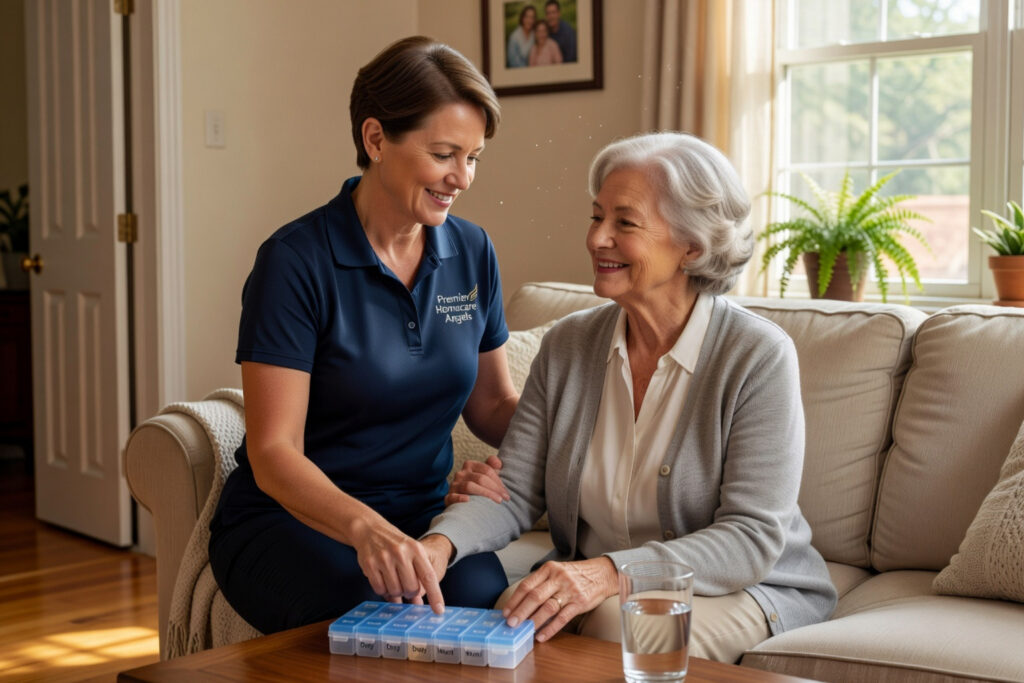
- Medication reminders — keeping daily routines on track
- Respite care — giving family caregivers a much-needed break
- Specialized support — dementia, Parkinson’s, post-hospital recovery
It’s flexible, one-on-one, and built around your loved one’s specific needs — not a one-size-fits-all facility schedule.
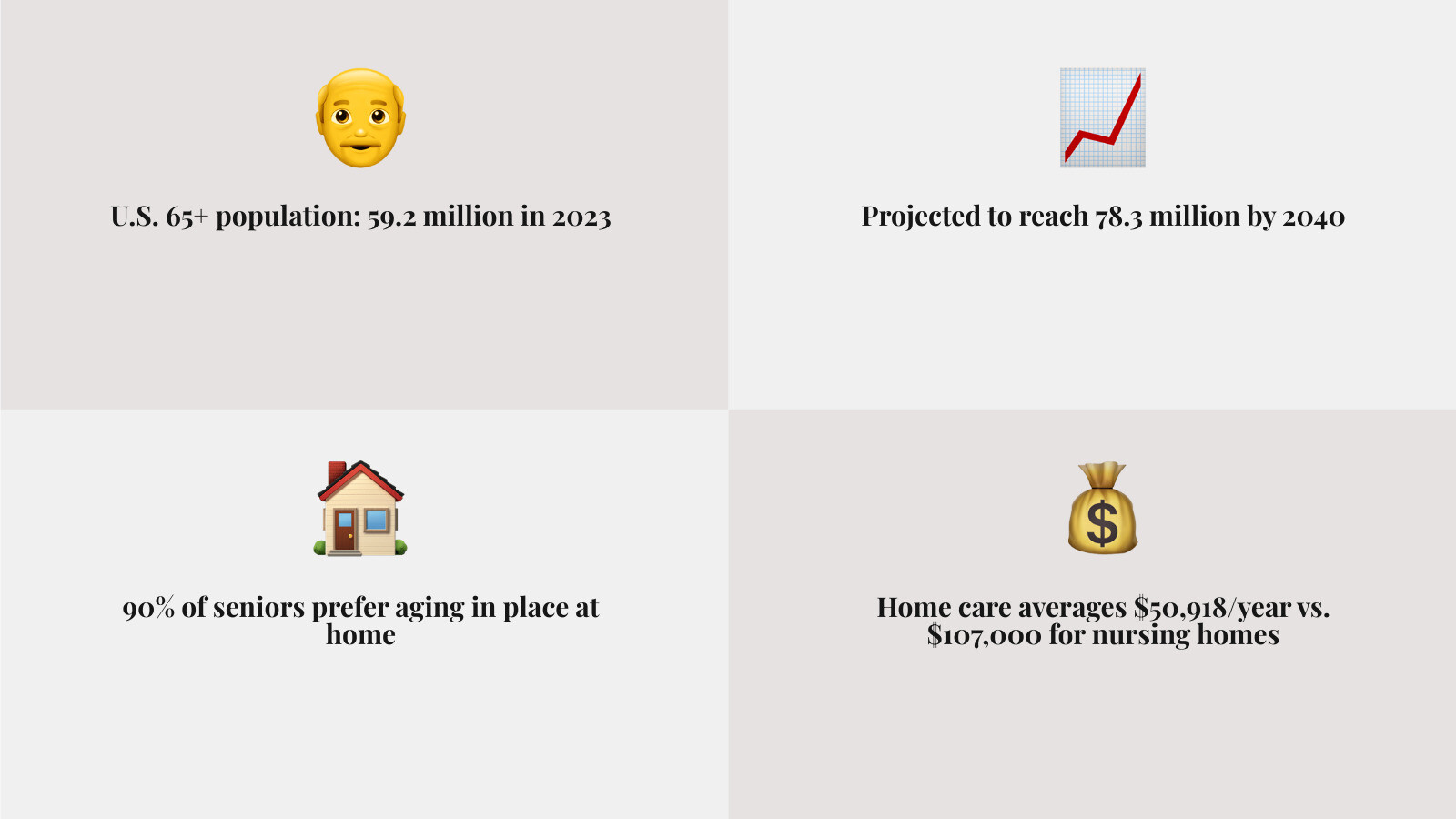
The numbers tell a clear story. The U.S. Census Bureau projects the 65-and-older population will grow from 59.2 million in 2023 to 78.3 million by 2040. More families than ever are navigating this decision — and most older adults strongly prefer to stay home.
That preference makes sense. Home is familiar. It’s comfortable. And as you’ll see in this guide, it’s often more affordable than people expect.
At Premier Homecare Angels, we’ve been providing compassionate private in home care for elderly adults throughout Alameda, San Leandro, Berkeley, Oakland, and the surrounding Bay Area — with caregivers trained in dementia care, personal care, and safe aging support. We put this guide together to help families like yours cut through the confusion and find the right path forward.
Private in home care for elderly terms you need:
Understanding Private In-Home Care for the Elderly
When we talk about private in home care for elderly individuals, we are referring to professional support delivered right where your loved one feels most secure. Unlike “home health,” which is usually clinical and short-term (think wound care or physical therapy after surgery), private home care is often non-medical and focuses on the long-term rhythm of daily life.
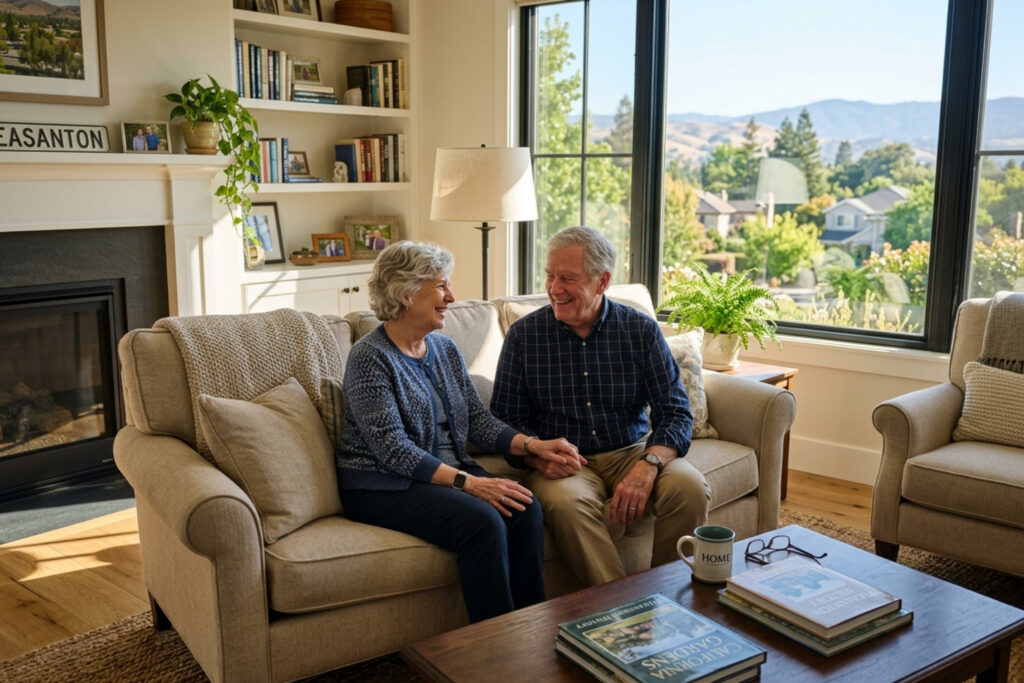
At its core, this service is about preserving dignity. It’s about making sure Grandma can still enjoy her garden in Berkeley or that Dad can keep his Sunday routine in San Leandro, even if he needs a little help getting out of bed or remembering his heart medication.
We categorize this help into two main groups:
- Activities of Daily Living (ADLs): These are the basics of self-care, such as bathing, dressing, grooming, toileting, eating, and moving around the house.
- Instrumental Activities of Daily Living (IADLs): These are the “life management” tasks, like light housekeeping, laundry, grocery shopping, preparing healthy meals, and managing transportation to appointments at the doctor’s office in Oakland or Hayward.
The beauty of this model is the one-on-one attention. In a facility, one staff member might be responsible for twelve residents. With Home Care Services, the caregiver is there for your loved one only, adapting to their mood, their pace, and their specific preferences.
Types of Private In-Home Care for Elderly Services
Every senior is unique, which is why we don’t believe in “cookie-cutter” care. Depending on what is happening in your family, you might need one or a combination of the following:
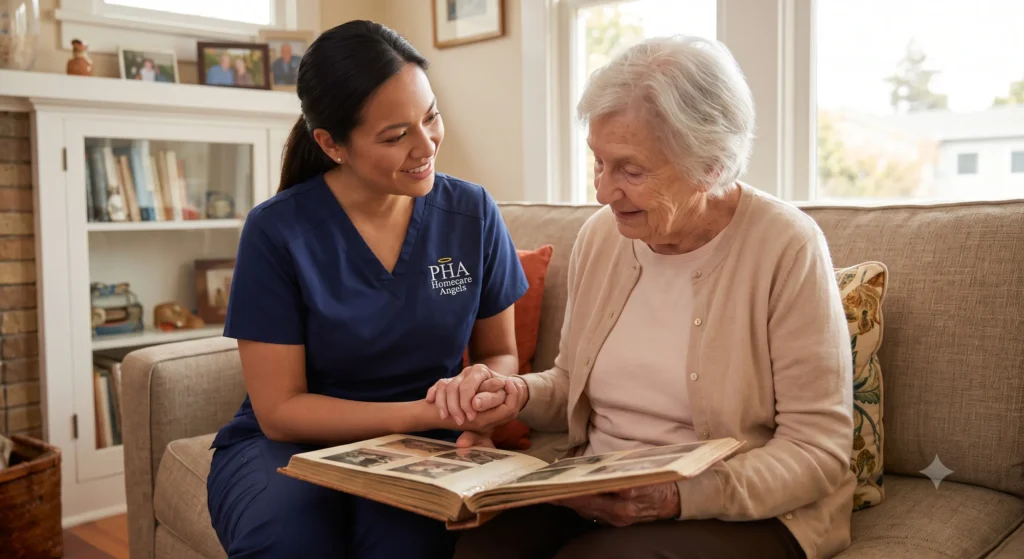
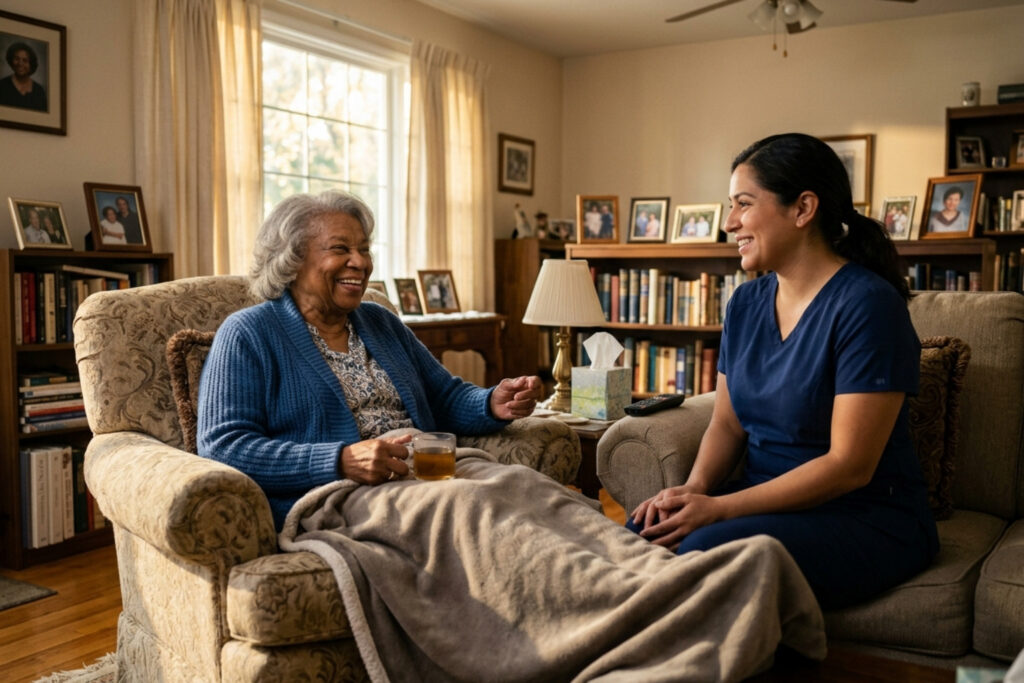
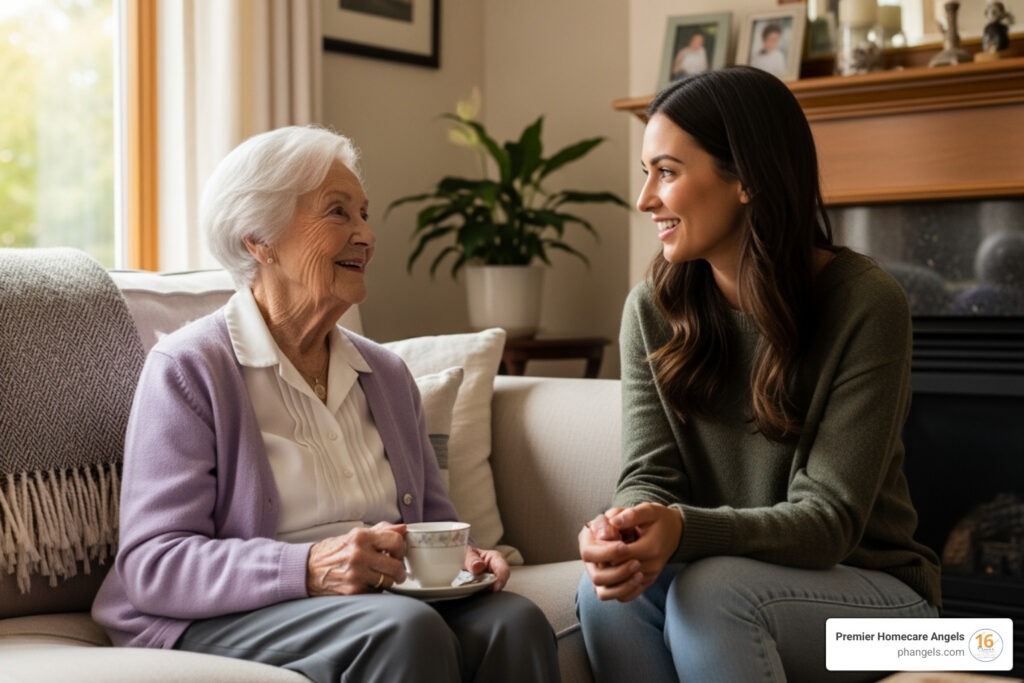
- Companion Care: This is perfect for seniors who are still mostly independent but are at risk of social isolation. It involves conversation, playing cards, going for walks in Piedmont, or simply having someone there to share a meal. Companion services for seniors are a powerful tool against the loneliness that often leads to depression and cognitive decline.
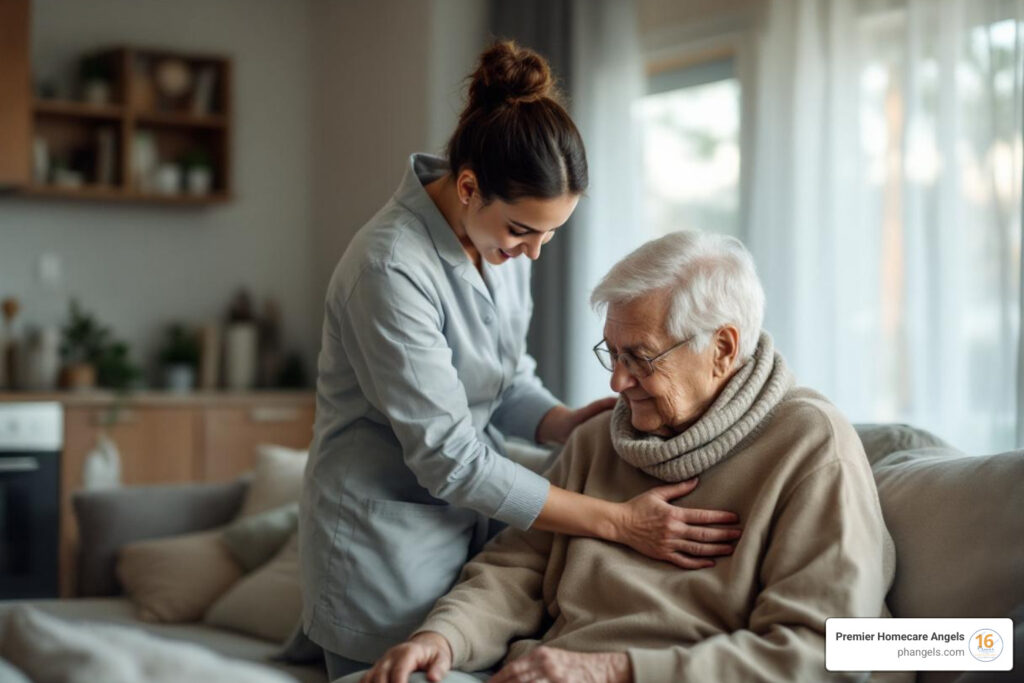
- Personal Care: This is a step up in support. It includes direct physical assistance with hygiene and mobility. It’s designed to keep seniors clean, safe, and comfortable.
- Respite Care: Are you the primary caregiver for your spouse or parent? We know how exhausting that can be. Respite care allows you to take a weekend off or attend to your own health while knowing a professional is stepping in to provide seamless support.
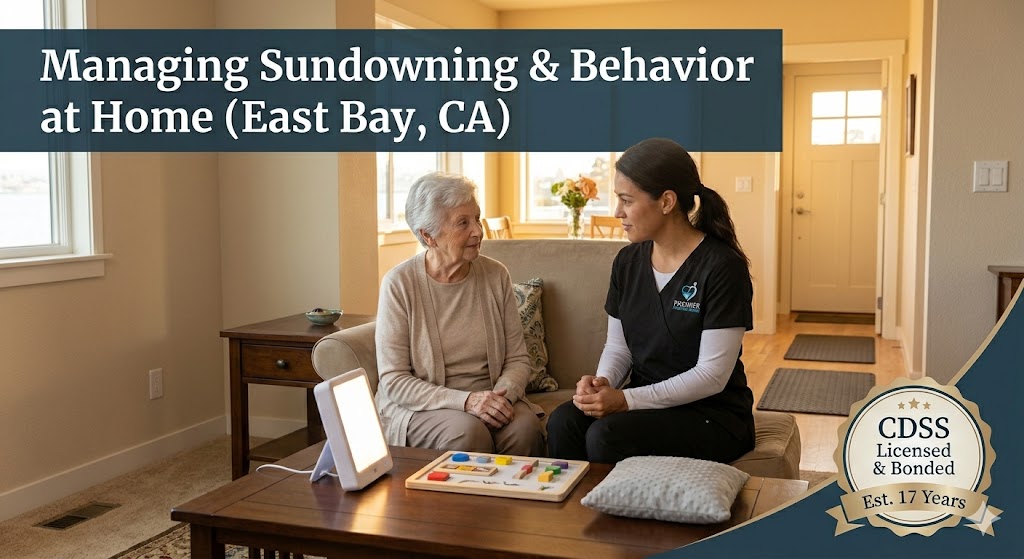
- Specialized Dementia and Alzheimer’s Support: Caring for someone with memory loss requires a specific set of skills. Our caregivers focus on “meeting the client where they are,” using techniques to reduce agitation and ensure safety without being intrusive.
- Transitional Care: This is short-term, intensive support for seniors coming home from a hospital stay in Walnut Creek or a rehab center in Pleasanton. We help prevent those dreaded hospital readmissions by ensuring discharge orders are followed and the home environment is safe.
- 24-Hour Support: For those with advanced needs or high fall risks, we provide round-the-clock care so that a senior is never left alone.
Who Benefits from Private In-Home Care for Elderly?
You might be wondering if it’s “time” to look into professional help. Generally, we see families reach out when certain conditions start to make independent living a bit shaky:
- Mobility and Fall Risks: If your loved one is unsteady on their feet or has had a “near miss” fall, having a caregiver for “stand-by” assistance can be life-saving.
- Chronic Health Conditions: Managing diseases like Parkinson’s, MS, or diabetes requires a consistent routine that can be hard for a senior to maintain alone.
- Cognitive Decline: When forgetfulness turns into safety concerns (like leaving the stove on or getting lost in their own neighborhood), professional oversight becomes necessary. You can find more details in our Complete Guide To Non Medical Home Care For Seniors.
- Post-Hospital Recovery: The first 48 hours after a hospital discharge are critical. We help with the heavy lifting—literally and figuratively—during this recovery phase.
- Social Isolation: If a senior has stopped driving or lost their social circle, a companion can reignite their interest in life and keep their mind sharp.
Key Benefits: Home Care vs. Nursing Facilities

Choosing between staying home and moving to a facility is a massive emotional hurdle. However, when we look at the data and the psychological outcomes, the benefits of private in home care for elderly adults are hard to ignore.
1. Comfort and Familiarity There is a profound psychological benefit to staying in a familiar environment. Seniors who “age in place” often report a higher sense of control and independence. They are surrounded by their own memories, their own furniture, and their own neighborhood.
2. Personalized Safety While nursing homes are built for safety, they can also feel clinical and cold. In-home care allows for a personalized safety plan. We conduct home walk-throughs to identify specific trip hazards in your house—like that one loose rug in the hallway or the lack of a grab bar in the guest bathroom.
3. Better Health Outcomes Studies show that seniors receiving one-on-one care at home often have shorter recovery times after illnesses and lower rates of infection compared to those in crowded institutional settings.
4. Cost-Effectiveness This is often the biggest surprise for families. Let’s look at the national averages (keeping in mind that Bay Area prices can be higher, but the ratio remains similar):
| Care Type | Average Annual Cost |
|---|---|
| Nursing Home (Private Room) | $107,000 |
| Assisted Living (1-Bedroom) | $57,000 |
| Private Home Care (40 hrs/week) | $50,918 |
Note: In high-cost areas like the Bay Area (Oakland, Berkeley, etc.), home care costs may trend closer to $70,000-$80,000, but they still represent a significant saving over the $150,000+ often seen for premium nursing facilities in our region.
5. Continuity of Care In a facility, staff turnover can be high. In private home care, we strive for a “perfect match.” This means your loved one sees the same friendly face every day, building a deep bond of trust that is simply impossible in a rotating shift environment.
How to Choose a Reliable Caregiver or Agency
Hiring someone to come into your home is a big deal. You aren’t just looking for a “helper”—you’re looking for someone you can trust with your family’s safety and your loved one’s dignity.
When looking for Bay Area home care services, we recommend asking these critical questions:
- Are your caregivers W2 employees? This is vital. If you hire an “independent” contractor (1099), you may be responsible for their payroll taxes, workers’ compensation, and liability if they get hurt on your property. At Premier Homecare Angels, our caregivers are our employees, meaning we handle the paperwork, taxes, and insurance.
- What is your screening process? A simple “background check” isn’t enough. You want an agency that conducts criminal background screenings, checks professional references, and verifies certifications.
- How do you handle caregiver matching? It’s not just about who is available; it’s about personality. If your mom is a retired librarian who loves quiet afternoons, she won’t want a caregiver who wants to talk loudly over the TV all day.
- Do you provide backup care? Life happens. Caregivers get sick or have car trouble. A reliable agency should have a deep pool of talent to ensure your loved one is never left without support.
Qualifications and Training to Look For
The “caregiver” title can cover a wide range of expertise. Understanding these distinctions helps you hire the right level of support:
- Personal Care Aides (PCAs): These workers provide companionship and help with household tasks. They often have on-the-job training but may not have formal medical certifications.
- Home Health Aides (HHAs): HHAs often have more formal training. The federal standard requires at least 75 hours of training, though many states (including California) have their own rigorous requirements.
- Certified Nursing Assistants (CNAs): These professionals are state-certified. They have undergone clinical training and passed a state exam. They are excellent for seniors with complex physical needs or those who require assistance with transferring (moving from bed to chair).
- Specialized Certifications: Look for caregivers who have additional training in CPR, first aid, and memory care (Dementia/Alzheimer’s).
At PHAngels, we ensure our team is equipped to handle the specific challenges of aging in place, from fall prevention to specialized nutrition for seniors.
Costs and Payment Options for In-Home Support
Let’s talk numbers. We know that for many Bay Area families in cities like Lafayette or Emeryville, the financial aspect is a major concern.
The cost of private in home care for elderly adults is usually calculated on an hourly basis. In 2023, the median hourly wage for home health aides was roughly $16.12 nationally, but in our local market (Alameda County and Contra Costa County), you should expect to pay more due to the higher cost of living and the higher level of expertise required.
Here is how most families fund this care:
- Private Pay: This is the most common method. Families use savings, pensions, or the proceeds from the sale of a home.
- Long-Term Care Insurance (LTCI): If your loved one has a long-term care policy, it likely covers in-home care. We often help families navigate these policies to ensure they get the benefits they’ve paid for.
- Veteran Benefits: Programs like Aid and Attendance can provide significant monthly stipends to veterans and their surviving spouses to help pay for home care.
- Medicare Advantage: While “Original Medicare” generally does not pay for non-medical personal care, some Medicare Advantage (Part C) plans have begun offering limited home care benefits. It is always worth checking your specific plan.
- Tax Considerations: In many cases, the cost of in-home care can be considered a deductible medical expense. We recommend consulting with a tax professional in the Bay Area to see how this applies to your situation.
For a deeper dive, check out The Ultimate Guide To Senior Care Services At Home.
Frequently Asked Questions about Private Home Care
How quickly can services typically start?
In an ideal world, we like to take a few days to conduct a thorough assessment and find the perfect caregiver match. However, we know that crises happen—a sudden hospital discharge or a primary caregiver getting sick. In many cases, we can start services within a 48-hour window, and sometimes even on the same day for emergency shifts.
Does Medicare cover private in-home care?
This is the most frequent question we get. The short answer is: Usually not for long-term personal care. Medicare is designed to cover “skilled” care—things like physical therapy or nursing care for a specific medical recovery. It does not cover “custodial care” (help with bathing, dressing, and meal prep) if that is the only care you need. However, as mentioned, some newer Medicare Advantage plans are beginning to fill this gap. You can read more in our guide: Everything You Need To Know About Care In The Home For Elderly.
How do you handle caregiver matching and scheduling?
We start with an intake consultation where we learn about your loved one’s health needs, but also their “life” needs. What do they like to eat? What are their hobbies? Are they an early bird or a night owl? We then look at our team’s technical skills and personality profiles to find a match. Scheduling is flexible—whether you need four hours a day in El Cerrito or 24 Hour In Home Elderly Care in Pleasanton, we build the schedule around you.
Conclusion
Aging is a journey that shouldn’t be traveled alone. Whether your family is in Albany, Castro Valley, or right here in Oakland, the goal is always the same: to ensure our elders live with the dignity, comfort, and safety they deserve.
Private in home care for elderly adults isn’t just a service; it’s a way to honor the people who raised us. By choosing in-home support, you are giving your loved one the gift of their own home, their own routine, and a dedicated companion who truly cares.
At Premier Homecare Angels, we treat every client like a member of our own family. We understand the unique landscape of the Bay Area and the diverse needs of the seniors who live here. If you’re ready to explore how we can help your loved one thrive at home, we’re here to listen.
Ready to take the next step?
- Contact Us for a free consultation.
- Explore our full range of Home Care Services to find the right fit for your family.