
Why Companion Services for the Elderly Matter More Than You Think
Companion services elderly families rely on are non-medical, in-home support services that help seniors stay socially connected, emotionally healthy, and safely independent at home.
Here’s a quick overview of what they include:
- Social companionship – conversation, games, shared hobbies, and outings
- Light household help – meal prep, light cleaning, laundry, and errands
- Health reminders – medication reminders and wellness check-ins
- Transportation – rides to appointments, grocery stores, and social events
- Family communication – regular updates to give families peace of mind
The numbers behind senior loneliness are hard to ignore. According to the CDC, nearly 1 in 4 adults over 65 is considered socially isolated – and 1 in 3 adults over 45 reports feeling lonely. These aren’t just emotional struggles. Research links social isolation to a higher risk of dementia, heart disease, depression, and even early death.
Yet for many seniors, the barriers to staying connected are real. Limited mobility, losing the ability to drive, the death of a spouse, or family members living far away can quietly shrink a person’s world. A familiar home can start to feel isolating.
That’s where companion care makes a genuine difference – not as a luxury, but as a meaningful form of support that protects both mental and physical health.
At Premier Homecare Angels, we’ve provided compassionate companion services for the elderly across Alameda County, Oakland, Berkeley, San Leandro, and the wider Bay Area, matching seniors with trained, vetted caregivers who bring real connection into the home. We’ll walk you through everything you need to know to make the right choice for your loved one.
Common companion services elderly vocab:
Understanding Companion Services for the Elderly
When we talk about companion services elderly individuals use to stay at home, we are looking at a holistic approach to aging. It’s not just about getting chores done; it’s about the “heart” of the home. Many people assume that home care only becomes necessary when a senior can no longer bathe themselves or needs medical injections. However, companion care is often the first step in a successful aging-in-place strategy.
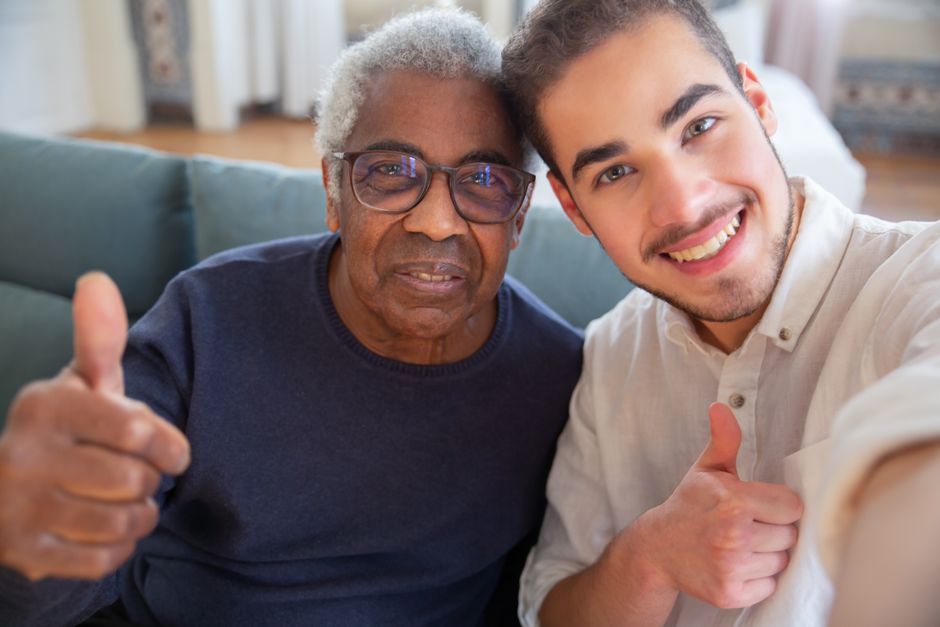
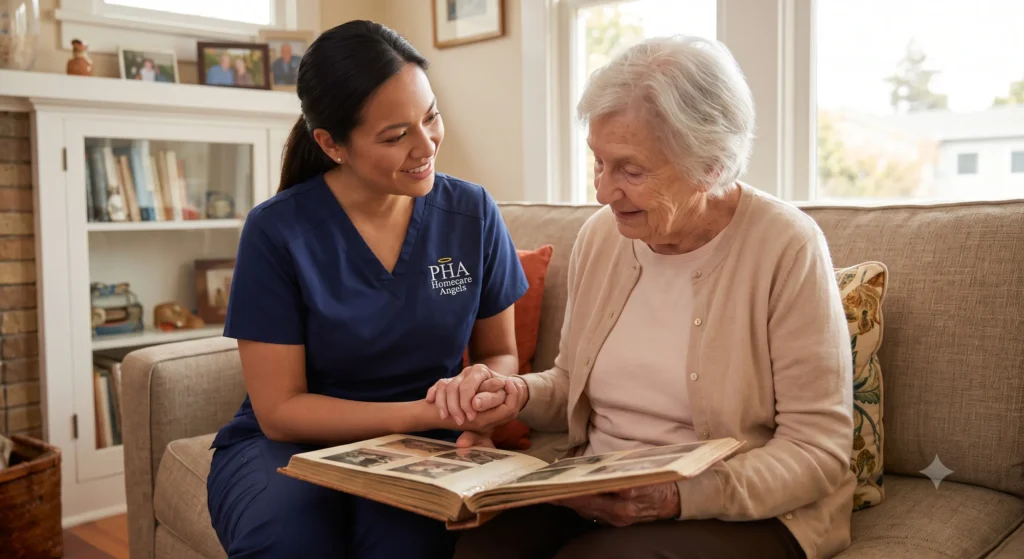
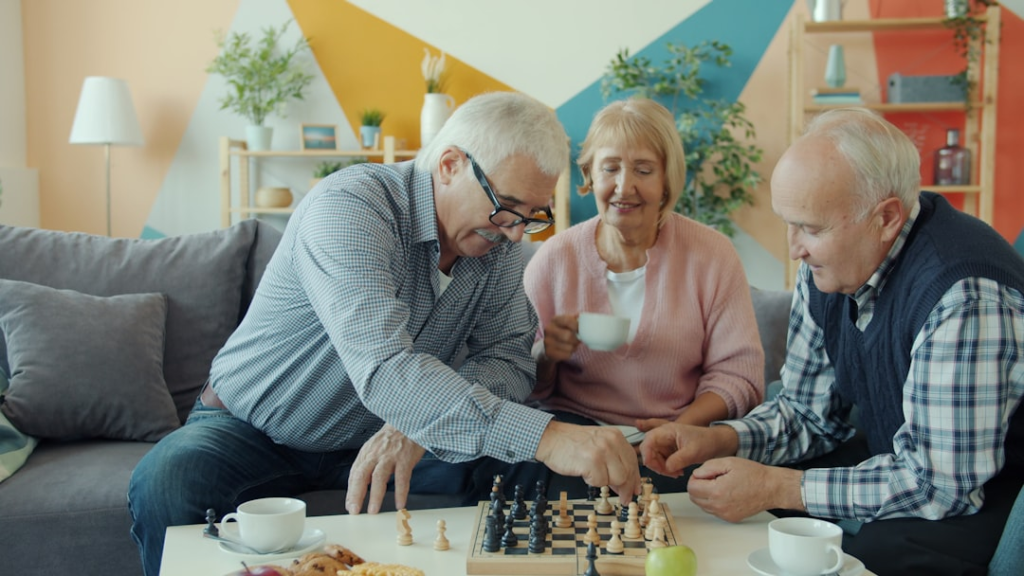
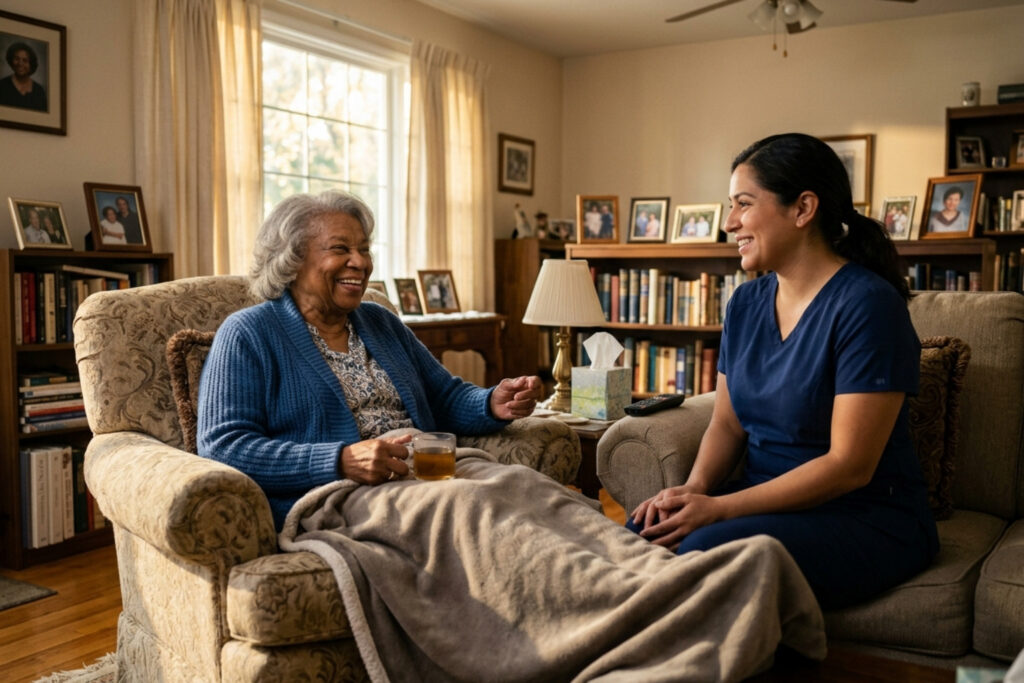
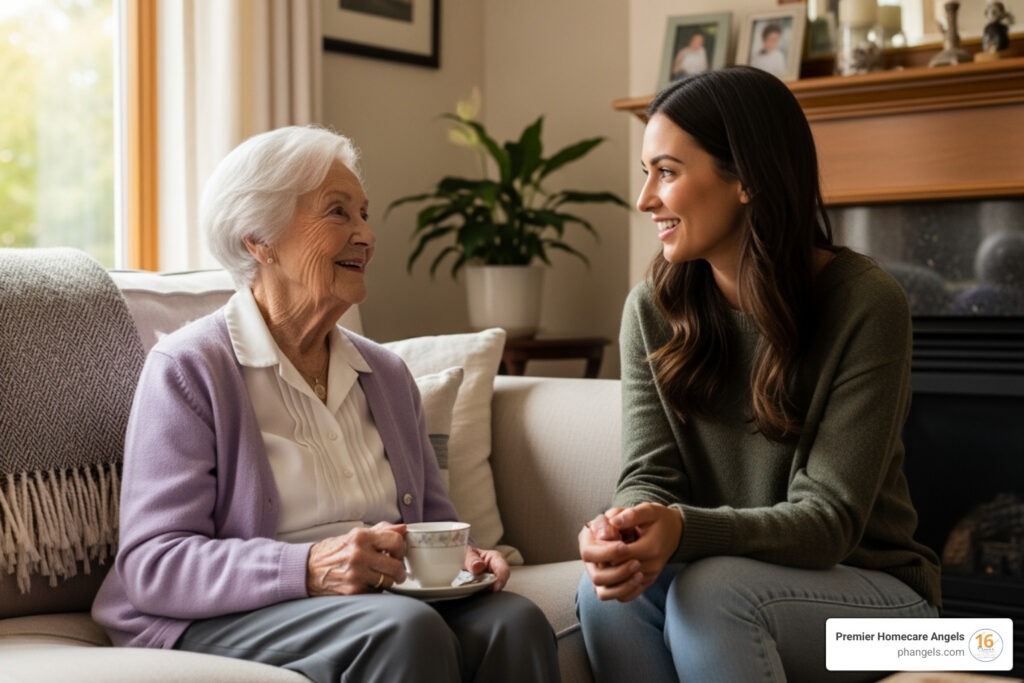
At its core, companion care provides non-medical support that prioritizes emotional health. It is designed for seniors who are still relatively independent but may be struggling with the quietness of an empty house or the mounting difficulty of daily tasks. We focus on the heart of home care by fostering a bond between the caregiver and the senior. This relationship often becomes a highlight of the senior’s week, providing something to look forward to—whether it’s a spirited game of Scrabble, a trip to a local Berkeley park, or simply a long conversation over tea.
To understand where this fits into the broader spectrum of care, it helps to see how it differs from personal care.
| Feature | Companion Care | Personal Care |
|---|---|---|
| Primary Focus | Socialization & Emotional Support | Physical Assistance & ADLs |
| Medical Training | Not required for basic roles | Often requires CNA or HHA certification |
| Key Activities | Conversation, Hobbies, Errands | Bathing, Dressing, Toileting |
| Household Help | Light Cleaning, Meal Prep | More intensive physical support |
| Goal | Independence & Mental Well-being | Safety & Physical Maintenance |
Key Assistance Provided by Companion Caregivers
The beauty of companion care is its flexibility. We don’t believe in a one-size-fits-all approach. Instead, we tailor services to what the individual actually needs to feel supported. According to the National Institute on Aging, there are many services for older adults living at home that can be combined to create a safe environment.
Here are the specific ways a companion caregiver helps:
- Meal Preparation: Nutrition is a cornerstone of health. Many seniors stop cooking for themselves because it feels like too much work for one person. Our caregivers help with meal planning, grocery shopping, and cooking nutritious meals that meet dietary needs, turning dinner into a social event rather than a chore.
- Light Housekeeping: Keeping a home organized can become physically taxing. We assist with laundry, dishes, and light cleaning to ensure the living environment remains safe and pleasant.
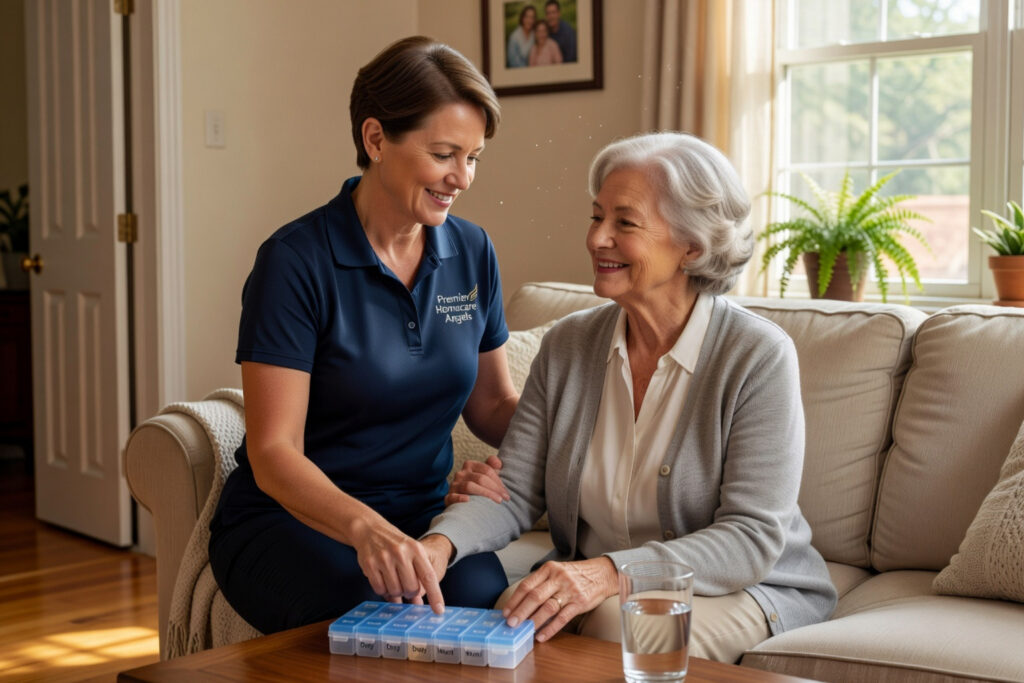
- Medication Reminders: While companion caregivers do not administer medication, they provide vital reminders. This ensures that seniors stay on track with their prescriptions, which is essential for managing chronic conditions.
- Transportation and Errands: Losing the ability to drive is one of the biggest hits to a senior’s independence. We provide rides to doctor’s appointments in Walnut Creek, grocery trips in Pleasanton, or even just a fun outing to a community event in Alameda.
- Safety Supervision: Just having another person in the house provides a layer of safety. Caregivers can spot trip hazards or notice changes in a senior’s health or behavior that might otherwise go unnoticed.
Who Provides Companion Services for the Elderly?
There are several ways families find companion services elderly loved ones can use. Some rely on “friendly visitor” volunteer programs or religious organizations. Others hire independent contractors. However, many families in the Bay Area find that working with a professional home care agency like Premier Homecare Angels offers the highest level of security and consistency.
When you choose a professional agency, you are getting the benefits of choosing a professional agency, which include:
- Vetted Caregivers: We conduct rigorous background checks and interviews so you don’t have to.
- Training: Our team is trained to handle the unique needs of seniors, including those with early-stage dementia.
- Reliability: If a caregiver is sick, an agency can provide a backup, ensuring your loved one is never left without support.
- Caregiver Matching: We don’t just send the first person available. We look at personalities, interests, and temperaments to find a caregiver who will truly click with your family member.
The Vital Benefits of Social Connection for Seniors
The impact of social connection on health is profound. We often focus on physical symptoms, but the mind and heart are just as important. In fact, research on loneliness and social isolation shows that being socially isolated is as damaging to health as smoking 15 cigarettes a day.
When we introduce companion care, we often see immediate improvements in several areas:
- Cognitive Stimulation: Engaging in conversation, playing games, and learning new things keeps the brain active. Experts agree that socialization and brain health are linked; regular interaction can help delay the onset of cognitive decline and keep memory sharp.
- Reduced Depression and Anxiety: Knowing someone is coming over to visit can drastically reduce the feelings of hopelessness that often accompany isolation.
- Heart Health: Studies have shown that lonely individuals have higher blood pressure and a higher risk of heart disease. The presence of a companion helps lower stress levels, which directly benefits the cardiovascular system.
- Improved Mortality Rates: Simply put, seniors with strong social ties live longer. They are more likely to take their medications, eat well, and stay physically active.
Enhancing Quality of Life Through Companion Services for the Elderly
Quality of life isn’t just about the absence of disease; it’s about the presence of joy. Companion services elderly clients utilize are designed to bring that joy back into focus. We use a philosophy of “interactive caregiving”—doing things with our clients rather than just for them.
Whether it’s helping a senior in Oakland tend to their garden or accompanying a client in Lafayette to a local museum, these activities promote a sense of purpose. Finding your perfect match means finding someone who shares those interests. When a senior and caregiver bond over a shared love of classic movies or knitting, the caregiver stops being “help” and starts being a friend. This emotional resilience is what allows seniors to maintain their dignity and independence even as they age.
Supporting Families and Preventing Caregiver Burnout
We often talk about the senior, but the family needs support too. If you are the primary caregiver for an aging parent, you know the weight of that responsibility. It can be exhausting, especially if you are also managing a career and children.
Companion care serves as a vital form of respite care. It gives you the “permission” to take a break, go on vacation, or just have an afternoon to yourself, knowing your loved one is in good hands. This provides incredible peace of mind. We also prioritize family communication, providing wellness check-ins and updates so that even if you live far away, you always know how Mom or Dad is doing. For families dealing with the complexities of 24-hour in-home elderly care, companion services are often a key part of the larger care team.
Navigating Costs and Insurance Coverage
One of the most common questions we hear is: “How much is this going to cost?”
In the Bay Area, costs can vary based on the level of care and the frequency of visits. Nationally, the median cost for companion care is roughly $34 to $35 per hour. In high-cost areas like San Francisco or Berkeley, you might see slightly higher rates. Most families pay for these services out-of-pocket, but there are other avenues to explore.
When looking at professional companion services, consider these payment options:
- Long-Term Care Insurance: If your loved one has a policy, it may cover non-medical home care. Check the specific “elimination period” and daily benefit limits.
- VA Benefits: Veterans and their surviving spouses may be eligible for the “Aid and Attendance” benefit, which can help cover the costs of home care.
- Medicaid: While standard Medicare does not cover companion care, some state Medicaid programs (like Medi-Cal in California) offer waivers for home and community-based services.
- Private Pay: Many families use savings or the sale of a home to fund care that allows a senior to stay in their familiar environment.
It is important to note Medicare coverage limitations. Medicare is designed for medical recovery—think physical therapy after a hip replacement or wound care. It generally does not cover long-term companion services because they are considered “custodial care” rather than “skilled care.”
Choosing the Right Companion Care Provider
Choosing someone to enter your loved one’s home is a big decision. You aren’t just looking for a resume; you’re looking for a person you can trust.
When vetting providers for companion services elderly family members, we recommend following these steps:
- Check Licensing and Insurance: Ensure the agency is licensed by the state and carries liability insurance and workers’ compensation.
- Ask About Background Checks: Does the agency perform criminal background checks and check references? At Premier Homecare Angels, this is a non-negotiable part of our process.
- Evaluate the Matching Process: Ask how they choose which caregiver to send. Do they consider interests and personality?
- Look for Reviews: Check the Better Business Bureau and online reviews to see what other families in the Bay Area are saying.
- Inquire About Supervision: How does the agency monitor the quality of care? Is there a care manager you can speak with if issues arise?
Understanding the ins and outs of non-medical home care helps you ask the right questions during the initial consultation.
Frequently Asked Questions About Companion Care
Does Medicare cover companion services for the elderly?
As mentioned, standard Medicare (Part A and B) typically does not cover companion care. It focuses on medical necessity. If your loved one needs skilled nursing or physical therapy at home, Medicare may pay for a home health aide for a short period, but only if they are also receiving those medical services. For long-term socialization and help with chores, you will likely need to look at private pay, long-term care insurance, or specific Medicaid waivers. You can use the Medicare care compare tool to find certified agencies in the Bay Area, but be sure to ask specifically about non-medical companion options.
How do I know if my loved one needs a companion?
Sometimes the signs are subtle. It’s not always a fall or a hospital visit. Look for:
- Social Withdrawal: Are they calling less often? Have they stopped attending their usual bridge club or church service?
- Neglected Chores: Is the mail piling up? Is the fridge full of expired food?
- Changes in Hygiene: Are they wearing the same clothes for several days?
- Forgetfulness: Are they missing appointments or forgetting to take their pills?
- Loss of a Spouse: The first year after losing a partner is a high-risk time for isolation and depression.
If you notice these signs, it might be time for non-medical elderly care 101—starting with a few hours of companionship a week.
What is the difference between companion care and personal care?
Think of it as “hands-off” vs. “hands-on.” Companion care is hands-off; the caregiver provides emotional support and helps with the environment (cleaning, cooking, driving). Personal care is hands-on; it involves touching the client to help with “Activities of Daily Living” (ADLs) like bathing, toileting, and dressing. If your loved one has significant mobility issues or incontinence, they may need a personal care assistant rather than just a companion. However, many agencies (ours included) can provide a blend of both as needs change.
Conclusion
Aging in place is a beautiful goal, but it shouldn’t mean aging in isolation. Human connection is the fuel that keeps us going, regardless of our age. Companion services elderly residents use in our community are about more than just checking boxes on a chore list—they are about building a bridge back to the world.
Whether your loved one is in Albany, Castro Valley, or El Cerrito, they deserve to feel seen, heard, and valued every single day. At Premier Homecare Angels, we treat every client like family because we know that a little bit of friendship goes a long way in maintaining health and happiness.
If you’re ready to explore how a companion can brighten your loved one’s life, we are here to help. From light housekeeping in Emeryville to social outings in Pleasanton, our team is dedicated to providing the highest quality Home Care Services in the Bay Area. Let’s make sure “staying at home” feels like “living at home.”