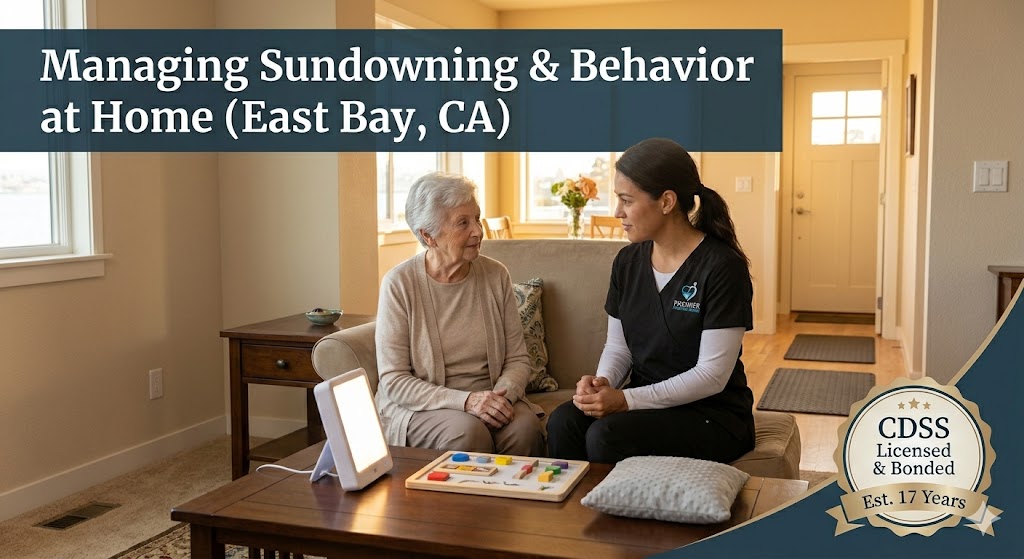

When you’re caring for an aging parent or loved one with dementia, the day doesn’t always end when the sun goes down.
A parent who was calm in the morning may become restless, anxious, suspicious, or confused as evening approaches. They may begin pacing, repeatedly ask to go home, wake several times during the night, or try to leave the house.
This pattern is often called sundowning. Sundowning describes increased confusion, agitation, anxiety, restlessness, or other behavioral changes that can occur in the late afternoon, evening, or nighttime in some people with dementia. It is not a disease itself, but a pattern of symptoms that may occur as dementia progresses.
For family caregivers, nighttime confusion can be particularly exhausting. Just as your own energy is running low, your loved one may need more reassurance, supervision, or hands-on assistance.
Here’s what families should know about sundowning, practical ways to make evenings calmer, and how to recognize when overnight dementia care may be appropriate.
What Is Sundowning in Alzheimer’s Disease?
Sundowning is a term used to describe a pattern of increased confusion, agitation, anxiety, or restlessness that occurs later in the day or at night in some people with dementia.
Someone experiencing sundowning may:
- Become more confused as the day progresses
- Ask the same questions repeatedly
- Pace or wander around the home
- Try to leave the house
- Become fearful or suspicious
- Have difficulty recognizing family members
- Resist bathing, bedtime, or other routines
- Wake frequently during the night
- Sleep during the day and remain awake at night
- Become unusually agitated or restless
The timing and symptoms vary from person to person. Some people experience nighttime confusion occasionally, while others struggle with it almost every evening.
Why Does Nighttime Confusion Happen?
There is rarely one simple explanation.
Fatigue can make it harder for someone with dementia to process what is happening around them. Changes in the body’s internal sleep-wake rhythm can also contribute. By evening, ordinary household sounds, shadows, dim lighting, and unfamiliar surroundings may become much more confusing.
Other factors can make nighttime behavior worse, including:
- Pain or physical discomfort
- Hunger or thirst
- A full bladder or the need to use the bathroom
- Medication side effects or changes
- Too much daytime sleeping
- Too little daytime activity
- An unfamiliar environment
- Infection or another acute medical problem
- Poor lighting or increased shadows
- Anxiety or overstimulation late in the day
A sudden change in nighttime behavior should not automatically be blamed on dementia. A new or dramatic change can sometimes signal a medical issue. Families should contact the person’s healthcare provider when behavior changes suddenly, particularly if there are other concerning symptoms.
Simple At-Home Strategies to Calm Evening Anxiety
Before considering professional changes, small adjustments to your home environment and evening routine can help smooth the transition from day to night.
- Manage the Lighting: Turn on indoor lights before the sun sets so there is no drastic shift in room brightness. Close blinds early to prevent disorienting reflections in windows.
- Lower the Noise: Reduce household noise after 5:00 PM. Turn off loud news broadcasts or chaotic TV shows and replace them with soft, calming music.
- Avoid big, heavy meals or caffeine in the late afternoon and evening, as digestion issues and stimulants disrupt sleep patterns.
- Offer Soothing Activities: Engage your loved one in gentle, repetitive tasks that offer a sense of accomplishment without frustration—such as folding soft hand towels, looking through a photo album, or receiving a gentle hand massage.

Key Signs and Nighttime Behaviors to Look Out For
Sundowning looks different for everyone, but recognizing the patterns early helps you adapt your approach. Common behaviors include:
- Pacing and Restlessness: Walking back and forth across the room, wringing hands, or repeating movements.
- “I Want to Go Home”: Asking to leave or packing bags, even when sitting in the living room they’ve lived in for decades.
- Shadowing: Following you closely from room to room out of fear of being left alone.
- Verbal Distress or Mood Swings: Unexpected outbursts, paranoia, suspicion, or calling out repeatedly.
- Sleep Reversal: Staying wide awake throughout the night and sleeping through the morning or afternoon.
Clear Signs It Is Time for Overnight Care
Even with the best routines in place, sundowning can progress to a point where home remedies aren’t enough to guarantee safety. Recognizing when you’ve reached a tipping point isn’t a failure—it’s a critical step in protecting both your loved one and yourself.
1. Safety Red Flags
Nighttime confusion carries physical risks that are hard to manage while you are trying to sleep:
- Wandering Risks: Unlocking doors and attempting to leave the house in the middle of the night.
- Fall Hazards: Trying to get out of bed unattended in the dark to navigate to the bathroom or kitchen.
- Kitchen/Fire Safety: Attempting to turn on the stove, use appliances, or light candles while disoriented.
2. Chronic Caregiver Burnout
Caregiving is a marathon, not a sprint. If you are waking up four or five times a night to soothe, redirect, or assist your parent, you are operating on severe sleep deprivation. Over time, chronic exhaustion leads to health complications, heightened stress, and impaired judgment during the day.
Remember: You cannot provide safe, compassionate care during the day if you are running on zero sleep night after night.
- A Simple Checklist: Does My Loved One Need Overnight Care?
Ask yourself:
• Is my loved one waking multiple times every night?
• Are they getting out of bed without assistance?
• Are they wandering after everyone else goes to bed?
• Have they tried to leave the house at night?
• Do they become frightened or agitated after dark?
• Do they need nighttime toileting or mobility assistance?
• Are they frequently calling out for reassurance?
• Are they attempting unsafe activities at night?
• Am I regularly losing sleep because I need to supervise them?
• Am I becoming physically or emotionally exhausted?
If several of these describe your situation, it may be worth discussing an overnight dementia care plan with a professional home care provider.
Overnight Care vs. 24/7 Care: What’s the Difference?
Overnight care generally focuses on the hours when the person is sleeping or when nighttime confusion is most severe. Depending on the care plan, a caregiver may assist with bedtime, toileting, mobility, repositioning, personal care, and supervision.
24/7 care provides continuous caregiver coverage throughout the day and night.
The right option depends on the person’s needs.
For example, someone who is independent during the day but wanders after midnight may benefit from overnight support. Another person who needs assistance with meals, bathing, mobility, medications reminders, toileting, and supervision throughout the day may need a broader 24/7 care plan.
There is a tradeoff worth considering: overnight care can be less expensive than continuous care, but it may not solve problems that occur during the daytime.
What Can an Overnight Caregiver Actually Do?
A non-medical caregiver can provide practical assistance and supervision based on the person’s care plan.
Overnight dementia care may include:
- Assistance with getting ready for bed
- Toileting and incontinence assistance
- Mobility assistance
- Repositioning and comfort checks
- Assistance with nighttime routines
- Companionship and reassurance
- Redirection during confusion or wandering
- Preparing a simple snack or drink when appropriate
- Monitoring for changes that should be reported to family
- Assistance in the morning with getting up and starting the day
A caregiver does not replace a doctor, nurse, or emergency medical service. Families should be clear about the difference between non-medical home care and skilled medical care when arranging services.
Frequently Asked Questions
How much does Alzheimers in-home care cost in the Bay Area?
In the Bay Area, private-pay home care rates vary by agency, location, shift length, and level of care. Overnight shifts may also be priced differently from hourly daytime care. Families should request a customized estimate based on the number of hours and type of assistance needed. Some agencies offer flat night rates for specific shifts, so it is always best to ask for a customized quote.
Can we use Long-Term Care Insurance (LTCI) for overnight home care?
Many long-term care insurance policies can help pay for qualifying in-home care, but coverage depends on the individual policy, benefit triggers, elimination period, and documentation requirements.
Will Medicare pay for overnight dementia caregivers?
Medicare generally does not cover ongoing custodial or non-medical overnight supervision, such as companionship, toileting assistance, or monitoring for wandering. It may cover certain short-term home health services when eligibility requirements are met and services are ordered by a healthcare provider
How do professional caregivers handle nighttime agitation without medication?
Experienced dementia professionals use environmental and behavioral strategies. They might close the blinds before dusk to prevent confusing shadows, maintain a soothing, low-lighting environment, play soft music, or offer a warm, decaffeinated beverage. Rather than arguing or repeatedly correcting the person, caregivers can acknowledge the person’s feelings, offer reassurance, and gently redirect their attention.
Finding Peace of Mind Under Your Own Roof
Sundowning can change the rhythm of an entire household.
The goal isn’t necessarily to eliminate every nighttime behavior. Instead, families can focus on identifying triggers, maintaining a predictable routine, improving safety, and making sure their loved one has the appropriate level of support.
If your loved one is wandering, waking repeatedly, becoming increasingly confused after dark, or requiring more nighttime assistance than you can safely provide, overnight home care may be worth considering.
You do not have to wait for a crisis before asking for help.
Premier Homecare Angels provides personalized in-home care for families in Alameda, Oakland in-home care, and surrounding Bay Area communities, including dementia care, personal care assistance, companionship, mobility assistance, and overnight and 24/7 care options.
A care consultation can help your family understand your options and determine what type of support best fits your loved one’s needs.
Call Premier Homecare Angels at (510) 227-5391 to discuss your loved one’s care needs or request a consultation.