
Something changes the moment a doctor says the word “Alzheimer’s.” The room feels different. The drive home feels longer. And somewhere between that appointment and your front door, you start carrying a question you weren’t ready for: What do we do now?
If you’re a family caregiver in Alameda, Oakland, San Leandro, Fremont, or anywhere across the East Bay—this article was written for you. Not for medical professionals or insurance adjusters. For you: the spouse who is quietly exhausted, the adult child navigating this from a distance, the sibling trying to hold everything together.
Let’s walk through the two most common paths families consider, what genuinely separates them, and how to make a decision you can feel at peace with.
Understanding Your Two Main Options
What Is In-Home Alzheimer’s Care?
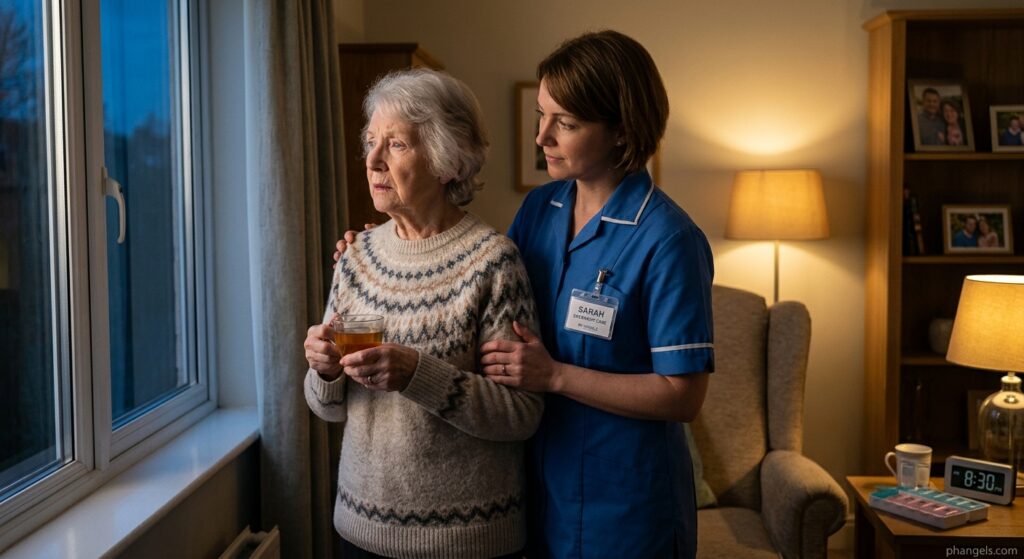
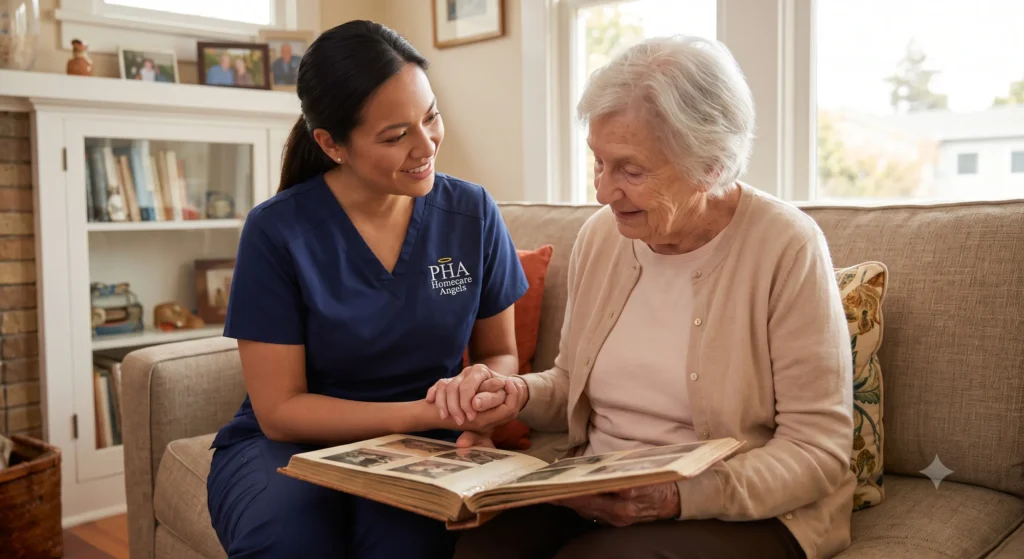
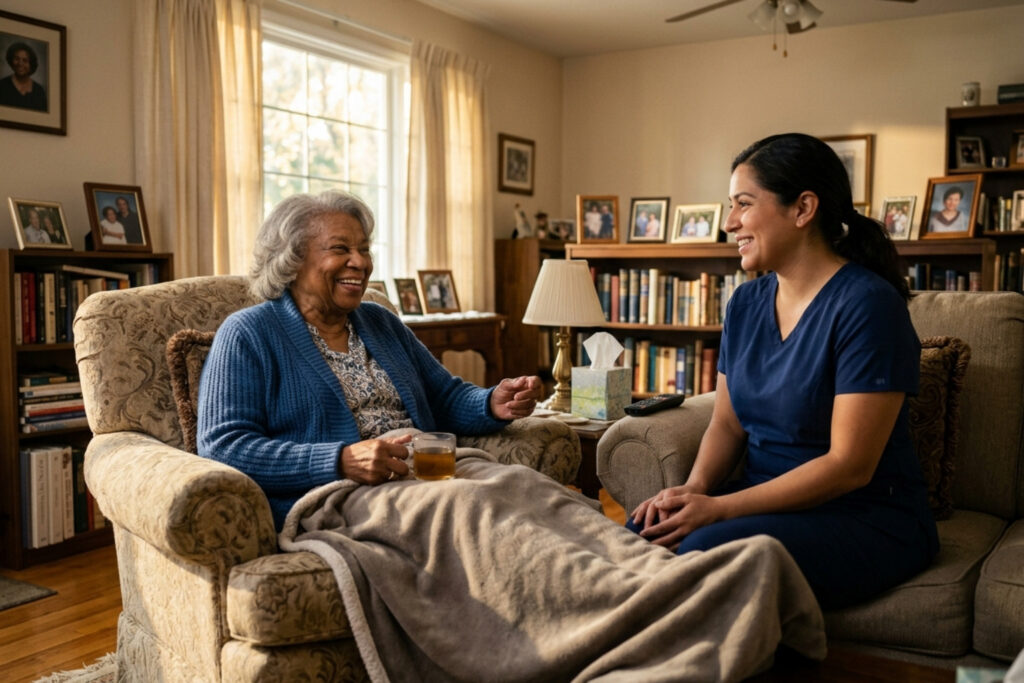
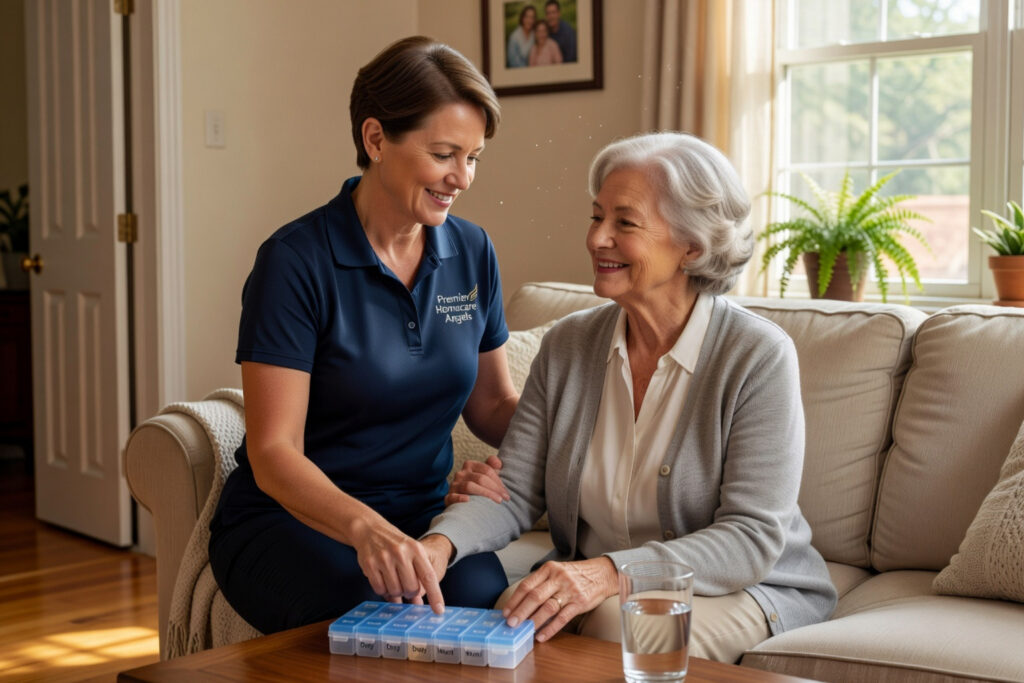
In-home care means a trained caregiver comes directly to your loved one’s home—the same home they’ve known for decades—and provides hands-on, personalized support right there. This can include help with bathing, dressing, and meals. It can mean medication reminders, gentle redirection when confusion sets in, and consistent companionship that keeps the day from feeling isolating or frightening.
In our years of coordinating care for families across Alameda County, the most consistent thing we hear is this: their eyes lit up when they realized they didn’t have to leave.
In-home care can range from a few hours a day to full-time, around-the-clock 24/7 care, and it’s designed to flex thoughtfully with your loved one’s changing needs.
What Is a Memory Care Facility?
A memory care facility is a licensed, secured residential community specifically designed for individuals living with Alzheimer’s disease and other forms of dementia. In California, these communities operate under strict oversight from the California Department of Social Services (CDSS)—specifically licensed as Residential Care Facilities for the Elderly (RCFEs)—and must meet state-mandated staffing ratios and safety requirements.
Memory care communities offer 24-hour supervision, structured programming, secured environments to prevent wandering, and staff trained specifically in dementia behavioral support.
The Real Differences: A Side-by-Side Look
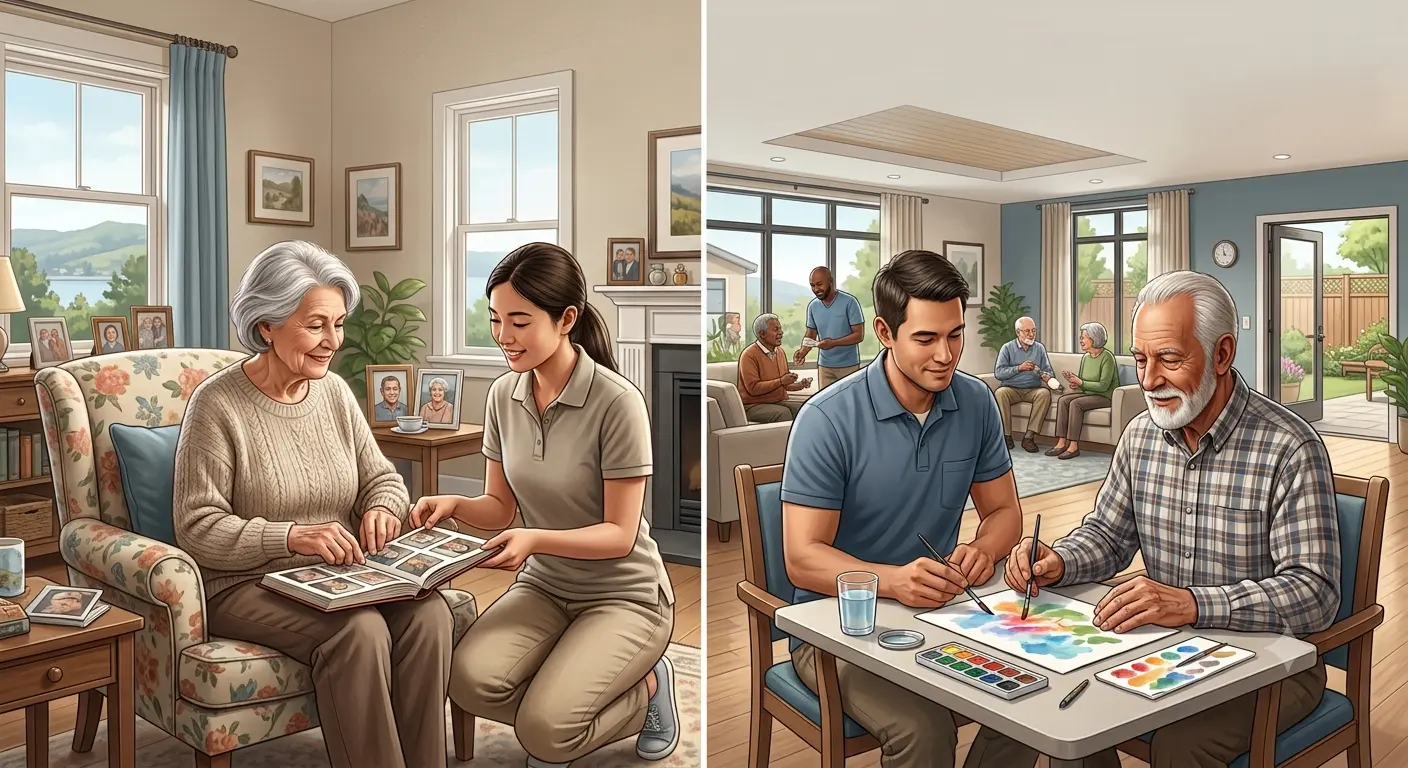
Both options can provide excellent, dignified care. The meaningful differences lie in environment, individualization, and cost.
| Factor | In-Home Care | Memory Care Facility |
|---|---|---|
| Setting | Familiar home environment | Secured residential community |
| Staff ratio | 1:1 dedicated caregiver | Typically 1:6 to 1:8 |
| East Bay Median Cost (2026) | $38–$45/hour | $7,000–$12,000/month |
| Family involvement | Flexible and continuous | Scheduled visits |
| Care personalization | Fully individualized | Program-based routines |
| State licensing | CA Home Care Aide Registry | CDSS / RCFE licensed |
Why Many East Bay Families Choose In-Home Care First
Why is a familiar environment important for Alzheimer’s patients?
Dementia research consistently points to one central truth: familiarity is therapeutic. The same kitchen. The same garden. The same afternoon light through the living room window. These sensory anchors meaningfully reduce anxiety, agitation, and confusion in someone with Alzheimer’s.
For a loved one who has lived in Alameda or Oakland for 30 or 40 years, relocating to a new facility can trigger what specialists sometimes call transfer trauma—a marked worsening of symptoms following an abrupt change in environment. Keeping them home, when safely possible, can preserve more of who they are for longer.
One-to-One Attention Changes Everything
In a memory care facility, staff members are responsible for multiple residents simultaneously—typically six to eight individuals depending on the time of day and shift structure. There is nothing inherently wrong with that. But it is profoundly different from having a single dedicated caregiver whose complete focus, for every hour of their shift, is your loved one.
That ratio matters. It means noticing the subtle changes—a slight increase in agitation before lunch, a new hesitation when standing—before they become bigger problems. It means care that is responsive rather than reactive.
Family Stays Woven Into Daily Life
When care happens at home, you don’t have to schedule a visit. You can stop by before work. You can sit at the kitchen table on a quiet Sunday morning. You remain woven into the daily fabric of your loved one’s life—not as a visitor, but as family.
For spouses especially, in-home care can be the difference between feeling present and feeling like you’ve already lost your partner.
Cost That Scales With Actual Need
The average monthly cost of a memory care facility in the East Bay—across cities like Fremont, Castro Valley, San Leandro, and Hayward—currently ranges from $8,000 to $12,000 per month. That is a fixed, largely non-negotiable expense from day one.
In-home care, by contrast, scales with what your family actually needs right now. If you need 20 hours of weekly support, you pay for 20 hours. As care needs grow, the support grows with them—without an abrupt or permanent relocation decision.
When a Memory Care Facility May Be the Right Choice
In-home care is not the right answer for every family at every stage, and it is important to be honest about that.
There are situations where a memory care facility may be the safer, more appropriate path:
- Severe or persistent wandering behavior that creates significant safety risks despite home modifications
- Aggressive or combative episodes that exceed what home-based caregivers can safely manage alone
- A caregiver spouse or family member who is themselves managing serious health challenges
- Rapidly advancing late-stage Alzheimer’s with complex medical needs requiring clinical-level oversight
- Meaningful social isolation where a community setting would provide engagement, peer connection, and structured routine
This decision is never a reflection of how much you love someone. It is about safety, sustainability, and the specific needs of your specific person—at this specific moment in time.
✅ Is In-Home Alzheimer’s Care Right for Your Family Right Now?
If you answer yes to most of these, in-home care is likely a strong fit:
- [ ] My loved one is still relatively comfortable and oriented in their current home
- [ ] Their core care needs (bathing, meals, medications, mobility) are manageable with dedicated caregiver support
- [ ] Wandering or aggressive behavior is not yet a daily safety emergency
- [ ] I want to maintain flexible, regular family involvement in their daily life
- [ ] Preserving their sense of home and independence matters deeply to who they are
- [ ] I need a care model that can scale gradually rather than requiring an immediate facility placement
⚠️ One honest note: If you are the primary caregiver and you are running on empty, that is a quiet emergency for both of you. Please do not wait until a crisis forces the decision. Reaching out while there is still time to plan thoughtfully is one of the most loving things you can do.
What California Families Must Know About Licensing and Safety
If you pursue in-home care in the East Bay, know that not all agencies operate at the same standard. In California, a trustworthy in-home care agency should be:
- Licensed through the California Department of Social Services under the Home Care Services Bureau
- Employing caregivers who are registered Home Care Aides (HCAs) through the state’s official registry
- Conducting mandatory background checks through both the California Department of Justice and the FBI
- Carrying full liability insurance and workers’ compensation to protect your household
When interviewing agencies in Alameda, Berkeley, or Hayward, ask directly: “Are all of your caregivers registered as Home Care Aides under California state law?” A reputable agency will answer without hesitation.
Questions to Ask Any Care Provider Before You Decide
Whether you are evaluating an in-home care agency or touring a memory care community, these questions will serve you well:
- How specifically are your caregivers trained in Alzheimer’s and dementia care?
- What is your protocol when a client’s condition changes or escalates?
- How do you communicate updates to families—and how often?
- Can I speak with current or former families you have served?
- What does your individualized care planning process look like?
- How do you handle emergencies outside of regular business hours?
Good care providers welcome every one of these questions. They should make you feel more confident, not less.
You Don’t Have to Figure This Out Alone
What you are carrying is genuinely hard. And you deserve a care partner who will walk through this with you honestly, patiently, and without pressure.
We have helped families across Alameda, Oakland, San Leandro, Castro Valley, Fremont, Berkeley, and the greater East Bay find the right care path for their loved one’s real life—not a generic solution from a brochure.
📍 Proudly serving Alameda and the East Bay
You have been taking care of everyone else. Let us help you take care of the person who matters most.
Premier Homecare Angels is a licensed in-home care agency proudly serving Alameda, Oakland, Berkeley, San Leandro, Castro Valley, Hayward, Fremont, and surrounding East Bay communities. Our caregivers are registered California Home Care Aides, fully insured, and background-checked through the California Department of Justice.