
If you’re sitting in a quiet room in Alameda right now, or taking a quick, stressed-out break at your job in San Francisco, take a second to just breathe. Caring for a parent or a spouse with Alzheimer’s or dementia is incredibly heavy. It’s exhausting, it’s lonely, and it drains you in ways people don’t understand unless they’ve been in the trenches. On top of the emotional weight, you’re stuck trying to figure out the brutal logistics—mainly, how are we going to pay for this?
We’ve spent years coordinating care for families across the East Bay and the wider San Francisco area. If there’s one thing we’ve learned, it’s that clear numbers do more to lower anxiety than any vague, comforting platitudes ever could.
Yes, our local rates are higher than the rest of the country. That’s the Bay Area reality. But let’s look at what the numbers actually look like, what’s driving them, and how to make sense of your options without losing your mind.
The Real Numbers: Hourly and Monthly Breakdown
Professional home care agencies charge by the hour. It’s set up this way so you can scale things up or down as the condition progresses.
Across California, the baseline for standard home care hovers around $38.50 an hour. But between our local cost of living and strict state regulations, you should expect actual agency rates in the Bay Area to run between $40 and $48 an hour for specialized memory care.
To give you a realistic target for a monthly budget, here is how those hours stack up using a middle-of-the-road regional rate of $44 an hour:
| What Care Looks Like | Hours Per Week | Realistic Monthly Bill | Who This Is For |
Respite Care | 16hours | $3,006 | Giving you a break twice a week to run errands, see a doctor, or just sleep. |
| Part-Time Daily Support | 30hours | $5,632 | 6 hours a day, Monday through Friday. Perfect for handling tough morning or evening routines. |
| Full-Time DayCoverage | 44hours | $8,261 | Standard daytimecoverage so you can work your regular job without panicking about safety. |
24/7Continuous Care | 168hours | $31,488 | Around-the-clock eyes on them. Necessary if wandering or heavy nighttime confusion becomes dangerous. |
A quick piece of reality here: if your loved one reaches a point where they need 24/7 monitoring, don’t expect one person to live in the house around the clock. Because of California labor laws regarding overtime and mandatory rest breaks, agencies handle this by rotating teams of caregivers.

Why Is Memory Care Around Here So Expensive?
It’s easy to look at these numbers and feel a bit of sticker shock. Why is care in Alameda County so much higher than in the Central Valley or other states? It really comes down to three local factors:
Specialized Skill Matters
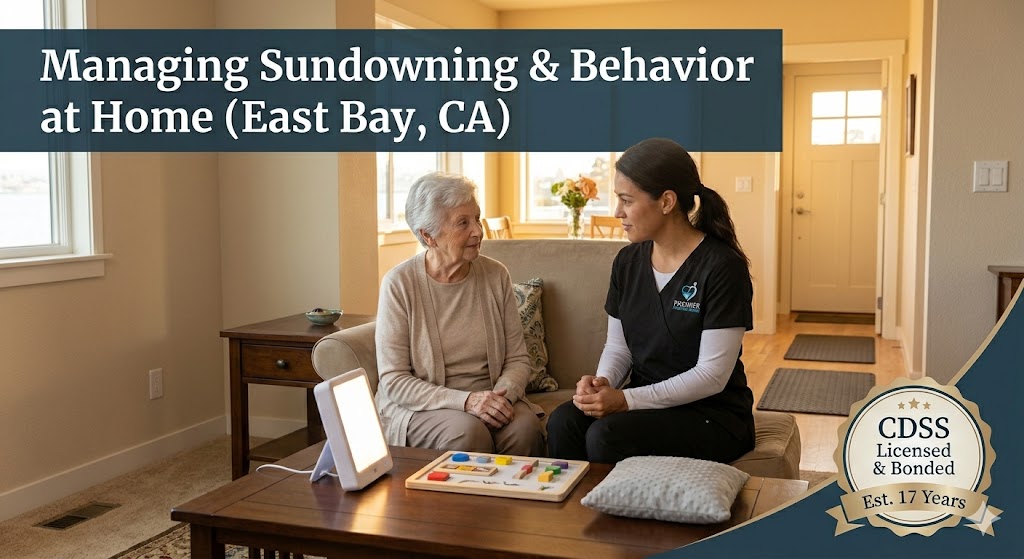
Dementia care isn’t just about cooking a meal or doing a load of laundry. It requires managing “sundowning”—that difficult phase in the late afternoon when confusion spikes and anxiety turns into agitation or anger. Caregivers have to learn specific communication strategies, like validation and redirection, to calm things down without escalating the stress. You are paying for that specific expertise.
The Bay Area Premium
We live in an incredibly expensive bubble. To keep reliable, deeply compassionate caregivers from leaving the industry or moving away, agencies have to pay competitive living wages. Good care requires people who aren’t constantly stressed about their own rent.
California Rules and Regulations
Our state operates under the California Department of Social Services (CDSS) Home Care Services Bureau. To protect seniors, licensed agencies have to ensure every single caregiver is registered with the state, passes Department of Justice fingerprint checks, clears TB screenings, and undergoes annual training. It adds administrative overhead, but it guarantees you aren’t letting a stranger with a questionable background into your home. CDSS also ensures that agencies are compliant by conducting site audits prior to granting and renewing HCO (Home Care Organization) licenses.
A Quick Reality Check Before You Start Calling Agencies
Don’t call agencies blindly. Take five minutes to look at this checklist so you know exactly what you’re asking for.
- The Safety Factor: Do they try to leave the house alone? Do they forget where they are or leave the stove on? If they wander, you need to budget for afternoon/evening coverage.
- The Basics (ADLs): Do they need hands-on help with the bathroom, showers, or getting dressed?
- Your Burnout Level: Are you losing sleep? Is your own health sliding? Be honest about how much of this you can actually sustain.
- The Paperwork Search: Did your parent buy a Long-Term Care Insurance policy twenty years ago? If so, dig it out. It often covers licensed home care, though you’ll have to clear an initial waiting period.
- Veteran Status: If they or their late spouse served during wartime, look into the Veterans Aid and Attendance Benefit. It can provide a massive monthly subsidy for home care aides.
Figuring Out the Financial Puzzle
Hardly anyone pays for this purely out of pocket. Most Bay Area families piecemeal a plan together using a combination of these options:
- VA Aid & Attendance: If your parent or their spouse is a wartime veteran, this tax-free monthly pension is incredibly impactful. Following recent cost-of-living updates, it can provide roughly $2,424 to $2,874 per month to help pay for home care. You’ll want to speak with a VA-accredited advisor to navigate the application.
- Long-Term Care Insurance: If a policy was purchased decades ago, find it.
Many cover in-home care, though they usually have a 60- to 90-day “elimination period” where you pay out of pocket before benefits kick in.
- IHSS & Medi-Cal: California’s In-Home Supportive Services (IHSS) program helps Medi-Cal-eligible seniors stay home. While it rarely covers the total number of hours a severe dementia diagnosis requires, families frequently blend IHSS hours with private care to bridge the gap.
- Sibling Cost-Sharing: If you are the sibling living locally in Oakland doing all the heavy lifting, it is entirely fair to set up an agreement where long-distance siblings contribute financially to offset the cost of professional care hours.
A Realistic First Step
You don’t have to solve the next three years of care tonight. Alzheimer’s care in Alameda is a progressive journey—what you need this month will likely change by winter. Because we’ve sat at kitchen tables across Alameda County for nearly two decades, we know that looking at a grid of numbers doesn’t tell you what your family’s specific bill will be. If you want an honest, no-pressure assessment of your situation—and a clear look at which financial resources might apply to you—reach out for a conversation. We can map out a flexible care plan together that protects both your loved one’s safety and your family’s savings.