
What a Personal Care Assistant Does — and How to Find the Right One
A personal care assistant (PCA) is a trained, non-medical caregiver who helps individuals with daily living activities — like bathing, dressing, meal preparation, and mobility — so they can remain safely at home.
Quick answer: What does a personal care assistant provide?
| Service Category | Examples |
|---|---|
| Personal hygiene (ADLs) | Bathing, dressing, grooming, toileting |
| Mobility support | Ambulation, transfer assistance, fall prevention |
| Household tasks (IADLs) | Meal prep, light housekeeping, laundry |
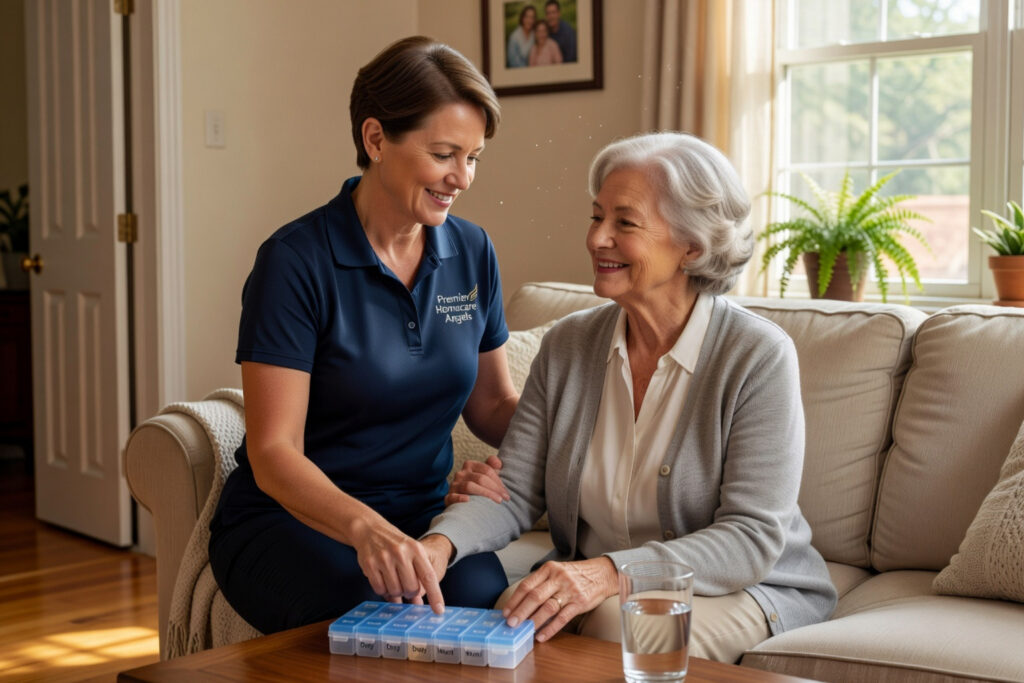
| Health-related tasks | Medication reminders, vital sign monitoring |
| Companionship | Conversation, errands, transportation |
PCAs are not nurses. They do not provide skilled medical care. But for millions of seniors and adults with disabilities, they are the difference between staying home and moving to a facility.
Right now, roughly 4.3 million home health and personal care aides work across the United States — and that number is projected to grow by 17% by 2034, driven almost entirely by an aging population that wants to stay home.
If you are caring for an aging parent or loved one in the Bay Area, you are not alone — and finding the right support does not have to be overwhelming.
At Premier Homecare Angels, we have spent years providing compassionate, professional personal care assistant services to seniors and families across Alameda County, Oakland, Berkeley, and the surrounding Bay Area. We understand the local landscape and what families like yours actually need — and we are here to help you navigate every step.
Personal care assistant vocab to learn:
What is a Personal Care Assistant?
At its core, a personal care assistant is a professional dedicated to helping individuals maintain their independence. While the title can vary—you might hear them called personal care aides, caregivers, or home care attendants—their mission remains the same: providing the essential support needed for a high quality of life within the comfort of one’s own home.
According to the U.S. Bureau of Labor Statistics, these professionals provide personalized assistance to individuals with disabilities or chronic illnesses. In our experience serving families in Albany, El Cerrito, and Kensington, we see how a PCA transforms a stressful living situation into a manageable, joyful one.
The support provided by a PCA is generally categorized into two groups:
- Activities of Daily Living (ADLs): These are fundamental self-care tasks. If a senior struggles to get out of bed, bathe safely, or dress themselves, a PCA steps in with hands-on assistance.
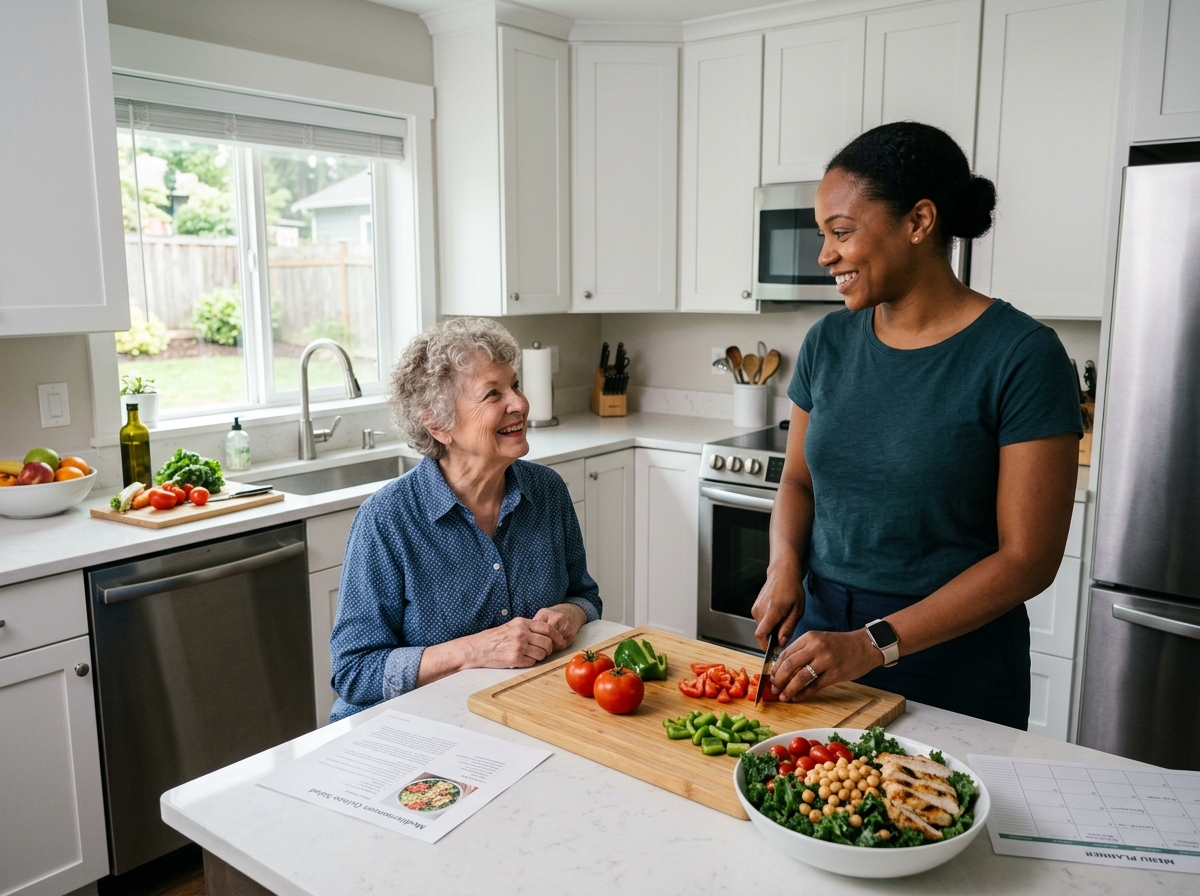
- Instrumental Activities of Daily Living (IADLs): These are tasks that support independent living but aren’t strictly “personal care.” They include things like meal preparation, light housekeeping, and running errands.
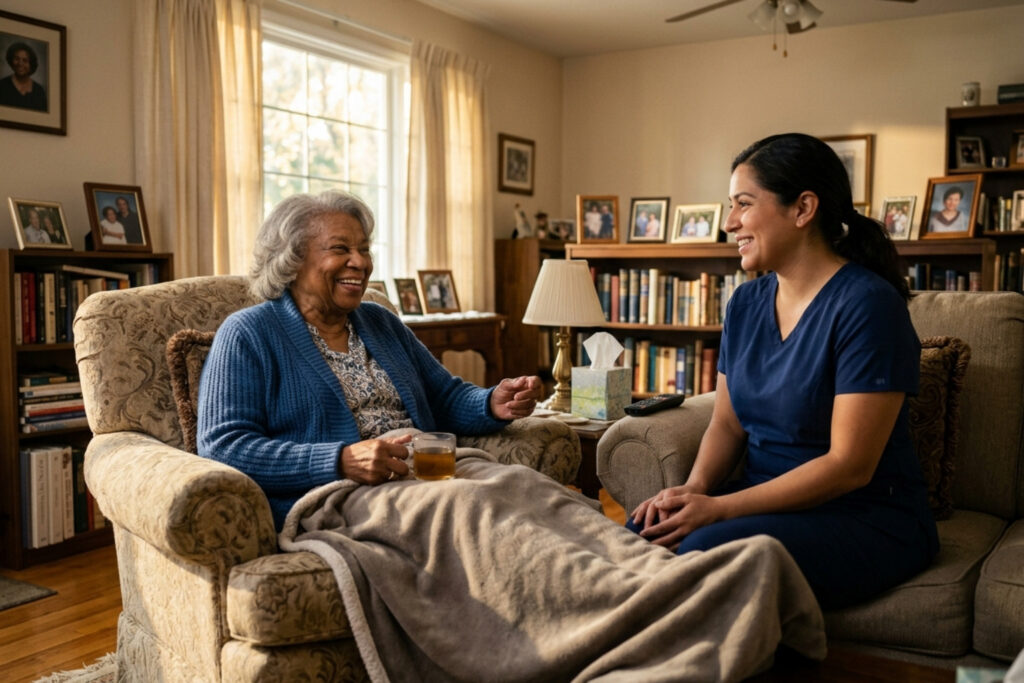
Beyond the physical tasks, a personal care assistant serves as a vital social link. For many seniors in the Bay Area, the PCA is a primary source of companionship, offering conversation and emotional support that prevents the isolation often associated with aging.
Key Duties and Health-Related Tasks
While a PCA is not a licensed medical professional, their duties often overlap with health monitoring. Under the direction of a supervisor or as part of a care plan, a PCA may perform the following:
- Bathing and Grooming: Ensuring the client remains clean and maintains their dignity.
- Dressing and Ambulation: Helping the client pick out clothes and move safely around the house to prevent falls.
- Toileting and Incontinence Care: Providing sensitive assistance with personal hygiene.
- Vital Signs Monitoring: Checking pulse, temperature, or respiration rates to report back to a registered nurse or family member.
- Nurse Delegation: In some settings, a PCA may perform specific health-related tasks (like changing a simple dressing) if a nurse has specifically trained and authorized them to do so.
- Bedside Care: Providing comfort and repositioning for clients who may be bedbound.
- Transportation and Errands: Driving a client to a doctor’s appointment in Berkeley or picking up groceries in Oakland.
Comparing Care Roles: PCA vs. HHA vs. CNA
It is very common for families to feel confused by the alphabet soup of healthcare titles. Is a PCA the same as an HHA? Does your loved one need a CNA? Understanding these distinctions is crucial for getting the right level of care—and for understanding what your insurance or Medicaid might cover.
| Feature | Personal Care Assistant (PCA) | Home Health Aide (HHA) | Certified Nursing Assistant (CNA) |
|---|---|---|---|
| Primary Focus | Non-medical / ADLs / IADLs | Basic health tasks + ADLs | Clinical care + ADLs |
| Training | Often on-the-job; varies by state | Min. 75 hours (federal) | 75–100+ hours |
| Medical Tasks | Very limited / Reminders | Basic (vitals, dressings) | Clinical (catheters, ROM) |
| Supervision | Agency or Family | Registered Nurse (RN) | RN or LPN |
| Environment | Private homes | Homes / Hospice | Hospitals / Nursing homes |
Professional Differences in Training and Scope
A Personal Care Assistant typically requires the least amount of formal clinical training. Many enter the field with a high school diploma and receive on-the-job training. Their role is heavily focused on companionship and the “human” side of care.
In contrast, a Home Health Aide (HHA) must complete a minimum of 75 hours of training to work for agencies that receive Medicare or Medicaid reimbursement. They are trained to recognize changes in a patient’s condition and can perform basic health-related tasks.
A Certified Nursing Assistant (CNA) has the most rigorous requirements. According to RegisteredNursing.org, CNAs must complete state-approved programs (often 75 to 100 hours) and pass a competency exam. They work under the direct supervision of a nurse and are more likely to be found in clinical settings like hospitals or skilled nursing facilities, though they also work in home care.
At Premier Homecare Angels, we match the professional’s skill set to your specific needs. If your loved one just needs help with the laundry and a walk around the block in Alameda, a PCA is perfect. If they have complex medical needs, we look toward higher levels of certification.
Qualifications and Career Outlook for a Personal Care Assistant
If you are considering a career as a personal care assistant, or if you are a family member wondering about the quality of the person entering your home, you’ll be glad to know the industry is professionalizing rapidly.
The “Bright Outlook” designation from O*NET indicates that this is one of the fastest-growing occupations in the country.
- Projected Growth: 17% from 2024 to 2034.
- Annual Openings: Approximately 765,800 jobs are expected each year.
- Education: 48% of new hires have a high school diploma or equivalent.
- Wages: The median annual wage was $34,900 ($16.78 per hour) as of May 2024.
While the entry requirements are accessible, the “soft skills” are what define a great PCA. We look for individuals who are dependable, compassionate, and possess high emotional resilience.
Work Environments and Physical Demands
Being a personal care assistant is a physically and emotionally demanding job. Unlike an office job, a PCA is on their feet, moving, and interacting constantly.
- Physical Proximity: 88% of the work involves very close physical proximity to the client.
- Lifting and Moving: PCAs must use proper lifting techniques to assist clients with transfers (e.g., from a bed to a wheelchair) to prevent back injuries.
- Infection Control: Following strict protocols to prevent the spread of illness is a daily requirement.
- Emotional Resilience: Working with seniors who may have dementia or chronic pain requires a patient, steady temperament.
- Flexible Scheduling: Because care is needed 24/7, PCAs often work non-traditional hours, including nights, weekends, and holidays.
Navigating Medicaid and PCA Service Eligibility
For many families in our service areas like Hayward, San Leandro, and Pleasanton, the cost of care is a major concern. Medicaid programs (known as Medi-Cal in California) often provide coverage for PCA services, but the eligibility criteria can be strict.
While specific programs like NJ FamilyCare or Horizon NJ Health (often cited in national research) have their own rules, most state-funded programs share a common framework for eligibility:
- Medical Necessity: A physician must order the services, documenting that the individual has a chronic condition or disability.
- Community-Based Residence: The individual must live in their own home or a community setting, not a nursing home or hospital.
- Hands-On Assistance Criteria: Generally, the individual must require “moderate or greater” hands-on assistance with at least one ADL, or “minimal assistance” with at least three ADLs.
Authorization and Limits of a Personal Care Assistant
Even when eligible, PCA services are not “unlimited.” They are carefully authorized based on a nursing assessment.
- The 40-Hour Cap: Many programs limit PCA services to a maximum of 40 hours per calendar week. Additional hours are usually only approved on a case-by-case basis for extreme medical necessity.
- No Carryover: If you are authorized for 30 hours this week but only use 20, those extra 10 hours disappear. They do not carry over to the next week.
- RN Supervision: To ensure quality, a Registered Nurse (RN) must typically supervise the PCA and visit the home every 60 days to review the care plan.
- Electronic Visit Verification (EVV): Most modern agencies use EVV systems (often a mobile app) to track when a PCA arrives and leaves, ensuring the state only pays for hours actually worked.
- 30-Day Expiration: If a client goes 30 consecutive days without using their authorized PCA services (perhaps due to a hospital stay), the authorization often expires and a new assessment is required.
Self-Directed Care and the Appeals Process
One of the most empowering developments in home care is the shift toward self-directed care. In many states, programs like the Personal Preference Program (PPP) allow the client to act as the employer.
In a self-directed model, the individual (or their representative) receives a monthly budget instead of a set number of agency hours. They can then hire their own personal care assistant, which can even include a friend or a family member in some cases. This offers incredible flexibility but also requires the family to handle payroll, taxes, and documentation.
What Happens if Services are Reduced?
Sometimes, a Medicaid managed care organization (MCO) might determine that a senior no longer needs as many hours of care. This is called an “adverse determination.”
If this happens, you have the right to appeal.
- Internal Appeal: You first appeal directly to the insurance provider or MCO.
- Fair Hearing: If the internal appeal is denied, you can request a Fair Hearing with an Administrative Law Judge.
- Documentation is Key: To win an appeal, you need detailed records. This includes the previous three years of nursing assessments, doctor’s letters, and progress notes from your current personal care assistant.
At Premier Homecare Angels, we help our clients maintain the meticulous recordkeeping required to protect their benefits. We believe that if a senior’s condition hasn’t improved, their care shouldn’t be cut.
Frequently Asked Questions about Personal Care Assistants
What is the number one difference between a PCA and a caregiver?
Technically, “caregiver” is a broad umbrella term that includes anyone—paid or unpaid—who looks after another person. A personal care assistant is a specific, professional role that involves hands-on assistance with physical tasks like bathing and toileting. While a “companion caregiver” might just provide social interaction and light help, a PCA is trained for physical, hands-on support.
How many hours of PCA services can I receive under Medicaid?
While it varies by state and individual assessment, the standard maximum is often 40 hours per week. If a person requires 24/7 care, they may need to look into other programs, such as Managed Long-Term Services and Supports (MLTSS), which are designed for individuals who meet “nursing home level of care” but wish to stay at home.
Can I choose my own Personal Care Assistant through self-directed programs?
Yes! Through self-directed programs, you have the authority to recruit, hire, and train your own assistant. This is a popular choice for families in diverse areas like Oakland and Berkeley who want a caregiver who speaks a specific language or understands a specific cultural background.
Conclusion
Choosing to bring a personal care assistant into your home is a major decision, but it is often the best path toward “aging gracefully.” It allows seniors to keep their routines, their pets, and their memories while getting the physical support they need to stay safe.
At Premier Homecare Angels, we don’t just provide staff; we provide peace of mind. Whether you are in Walnut Creek, Castro Valley, or Piedmont, our goal is to treat your family like our own. We specialize in creating personalized care plans that evolve as your needs change.
If you are ready to explore how a personal care assistant can help your loved one remain securely in their familiar environment, we are here to talk.
Ready to take the next step? Contact us today for a consultation or learn more about In-home care in Oakland, CA to see how we can support your family’s journey.